Why Trump Fears Datacenters Could Cost His Party the Election
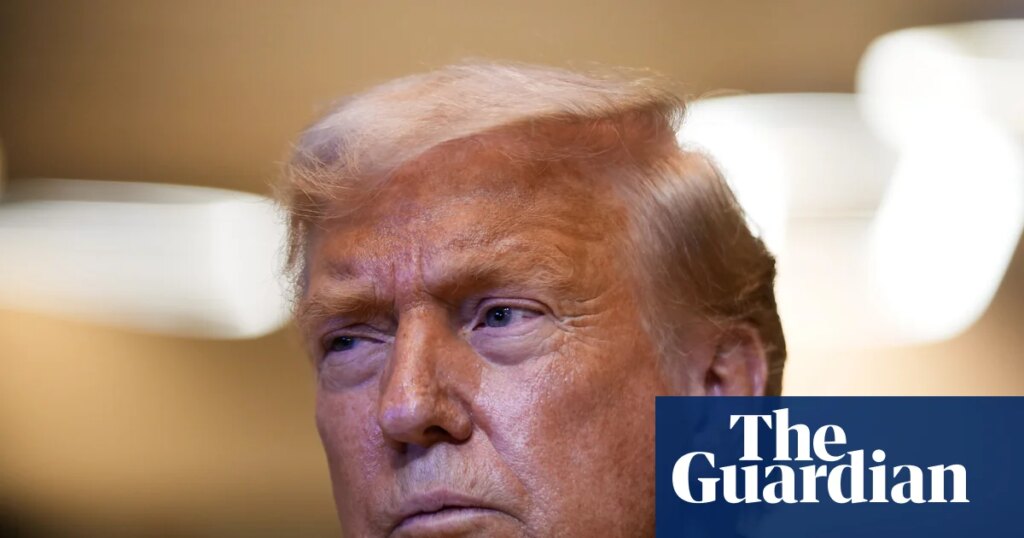
Donald Trump has expressed significant concern regarding the impact of datacenters on the electricity market in the United States, particularly as energy costs continue to rise. His apprehension raises questions about whether the dissatisfaction of Americans with escalating energy prices will hinder his party’s electoral prospects in November.
Trump’s unease has been apparent through a series of actions taken in recent weeks. On January 13, he collaborated with Microsoft’s president to announce that the technology giant would increase its financial contributions for its datacenters. This includes paying full property taxes and refraining from seeking reductions or discounts on electricity rates in the municipalities where it operates.
In a post on Truth Social, Trump stated, “We are the ‘HOTTEST’ Country in the World, and Number One in AI. Data Centers are key to that boom, and keeping Americans FREE and SECURE but the big Technology Companies who build them must ‘pay their own way.’” He thanked Microsoft for their commitment as part of this initiative.
On January 16, Trump, alongside governors from northeastern states, instructed the country’s largest power grid operator to schedule an emergency reliability power auction by September. This move may compel tech giants to fund the construction of new power facilities by mandating them to bid on the anticipated reliability of the electricity they intend to draw from the grid.
“I never want Americans to pay higher electricity bills because of data centers,” Trump asserted.
Subsequently, on January 20, OpenAI echoed Microsoft’s pledge, committing to “paying our own way on energy, so that our operations don’t increase your electricity prices.” This initiative is part of the Stargate collaboration, an alliance between the AI sector and the Trump administration aimed at investing $500 billion in AI infrastructure.
Trump is beginning to address the challenges posed by rapidly growing electricity demand. He has promised to cut electricity bills in half for American households. However, as reported by the Guardian shortly after Trump’s and Microsoft’s announcement, fulfilling this promise appears increasingly unlikely. The exploding demand for electricity driven by AI advancements is concerning, especially as the administration appears to be blocking renewable initiatives that could produce energy for millions of households. Instead, there is a push towards fossil fuels, including the reopening of coal plants and the resumption of liquefied natural gas exports, which paradoxically may raise costs for consumers further.
The issue of power costs is intricately linked to broader concerns about the rising cost of living in the United States, a topic that may put Trump’s party at a disadvantage as the midterm elections approach.
Elon Musk is also involved in this tech narrative. On January 15, the U.S. Environmental Protection Agency (EPA) ruled that Musk’s company xAI was illegally operating methane-powered generators at its facility in Memphis. This ruling serves as a warning to tech companies seeking additional electricity resources: simply deploying backup generators is not an option. Instead, they may need to invest in nuclear plants, as seen with other tech giants like Microsoft and Google.
Similar challenges are reflected in Europe, where governments are grappling with the high demand from datacenters. For instance, Germany, which has the most datacenters in Europe, is seeing growth limited by soaring electricity prices. Chancellor Friedrich Merz supports expanding datacenters but has chosen a different path compared to Trump’s approach with Microsoft. In November, his party proposed subsidizing industrial electricity usage until 2028 and lowering grid fees for both consumers and businesses. Unlike the U.S., datacenters in Germany must source half of their electricity from renewable sources. There’s widespread skepticism about the tech industry’s commitment to adhering to this requirement, contributing to wariness about expanding datacenter operations.
In the UK, which ranks second in datacenter construction in Europe, new facility developments are rising amid surging energy costs. Electricity prices in the UK are already significantly higher than those in the US, contributing to a prolonged cost-of-living crisis. Nonetheless, the Department for Science, Innovation and Technology proposed in November to provide electricity discounts to datacenters within designated “AI growth zones” to stimulate investment and expansion.
The situation is further complicated in neighboring Ireland, where datacenters are using more electricity than all urban households combined as of 2024. This situation has prompted the Irish government to impose a ban on new datacenter connections to Dublin’s power grid since 2021, effectively halting new constructions in the area until its relaxation in December.
The rapid expansion of datacenters is now shifting to regions with varying resource constraints. Trump and major tech companies are undertaking the development of massive datacenters in the United Arab Emirates and several Gulf states, where energy is considerably more affordable. However, these datacenters also require significant water resources for cooling, which are increasingly scarce. Furthermore, Microsoft, Amazon, and Meta have announced an investment of $17 billion in data centers in India, despite challenges posed by inconsistent electricity reliability and aging infrastructure, which may exacerbate local pollution levels.

Jessica
https://www.linkedin.com/company/aucteraAffiliate Content Writer