“I’m selecting champions”: UK Business Secretary adopts an activist stance on driving economic growth
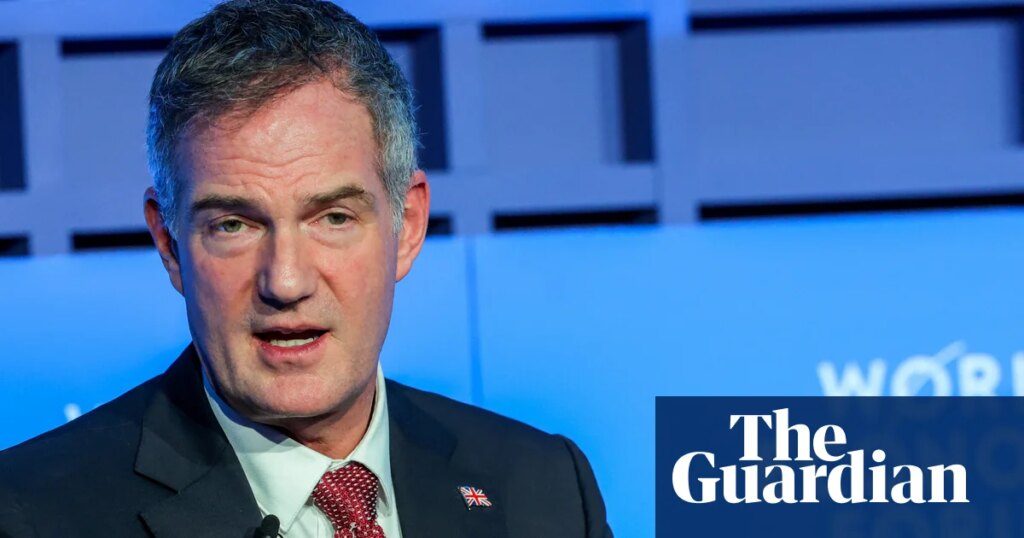
The United Kingdom’s business secretary, Peter Kyle, has declared his commitment to “betting big” and “picking winners” as part of the government’s strategic initiative to invest in burgeoning businesses, aiming to stimulate economic growth.
At the recent World Economic Forum held in Davos, where he alongside Chancellor Rachel Reeves discussed the UK’s economic prospects, Kyle emphasized a more proactive approach to industrial policy. He characterized the government’s strategy as “activist,” indicating a shift towards hands-on intervention in the market.
The concept of “picking winners” can evoke historical references, particularly to Conservative Prime Minister Margaret Thatcher’s critique of the Labour strategy in the 1970s, where she argued for the private sector’s role in determining which companies succeed. However, Kyle is unabashed in his embrace of this strategy, positing that vigorous governmental action could catalyze economic development. “I want to ensure that the benefits of growth are felt more swiftly than is currently the case. A predicted growth rate of 1.5% this year simply isn’t sufficient,” he stated.
One of the government’s pivotal moves includes empowering the state-owned British Business Bank with the authority to purchase equity stakes in companies. Kyle highlighted a notable recent investment of £25 million into the energy firm Octopus’s software offshoot, Kraken.
“The most significant potential for our economy, both in the short and medium term, lies with scale-up companies,” Kyle remarked. “During my visit to Octopus yesterday, I learned they now employ 1,500 people at their London headquarters alone.” He stressed the importance of identifying similar companies on growth trajectories and facilitating their expansion to generate substantial new jobs and wealth, effectively recycling that wealth through the economy quickly.
Kyle emphatically stated, “I am betting big and picking winners. It’s a more proactive strategy, and there will inevitably be failures. However, in a healthy economy, failure is often a precursor to success.”
The summit in the Swiss ski resort was impacted by Donald Trump’s recent threats to impose tariffs on eight European nations, should they oppose his ambitions regarding Greenland. Although the president backtracked on these tariff policies following talks with NATO’s Secretary General Mark Rutte, numerous leaders at Davos acknowledged that the global economic landscape is irrevocably shifting.
In the face of international uncertainty, Kyle reiterated the importance of advancing the Labour agenda. He pointed out the plethora of opportunities presented by technological advancements and life sciences, urging stakeholders to seize them. “If we become too intimidated by global challenges or distracted by domestic political skirmishes, we risk losing sight of significant opportunities that could yield real benefits for real people,” he stated.
Kyle expressed concern for the younger generations, stating, “There will be children growing up like I did who may not achieve success as I have. Without intervention, impoverished communities may never experience prosperity. This reality is intolerable to me. I am prepared to do whatever it takes, even if that includes occasionally betting on winners and facing failure.”
In line with boosting the UK’s appeal to global talent, Kyle announced an expansion of the government’s “global talent taskforce” within his department. He suggested that the UK is strategically positioned to leverage the disruption caused by Trump’s policies to attract jobs and investment. “I am determined to attract top talent from wherever it exists. Talent crosses the Atlantic in both directions, and it’s essential to ensure a balance, as traditionally, it has been too skewed,” he asserted.
Emphasizing the urgency of attracting innovators, Kyle noted, “While tariffs disrupt the American market, the US is currently not the most inviting environment for scientific endeavors. Considering the global landscape, we are promoting our favorable regulatory environment for life sciences and many other sectors.”
Opposition leader Keir Starmer has adopted a stringent stance on immigration, despite a degree of pushback from party members regarding his criticisms of Boris Johnson’s so-called “open borders” strategy. Yet, Kyle believes that concerns regarding immigration do not generally extend to affluent entrepreneurs wishing to invest in the UK. “Public skepticism has been largely focused on the inherited immigration and asylum systems, which have faced numerous inefficiencies. However, I have yet to hear anyone argue against welcoming individuals with substantial financial resources who are interested in contributing to our economy,” he stated.
Kyle noted, “I have a specialized taskforce actively engaged in our global outreach, offering the world’s most talented individuals a customized opportunity to come to the UK quickly, integrate, and participate in a prosperous funding landscape.”
The 55-year-old MP, representing Hove and Portslade, has held the position of business secretary since Keir Starmer’s September reshuffle, following Jonathan Reynolds’ previous tenure. Close to health secretary Wes Streeting, who has been speculated to be a potential leadership rival to Starmer, Kyle continues to publicly support the prime minister.
Earlier this week, he dismissed calls for the UK to negotiate a customs union with the EU, a policy that Streeting has shown some support for. “I believe it would be unwise to pursue what might seem like simple solutions at this moment,” Kyle stated.
Kyle has navigated a unique path in politics, having struggled with dyslexia and once leaving state school with minimal qualifications. He transitioned to university at the age of 25, eventually obtaining a PhD and working in the charity sector before entering politics.
Previously, as technology secretary, he faced scrutiny regarding his close ties to influential technology firms. A frequent user of the ChatGPT AI tool, he champions its potential benefits, often adopting a casual style associated with the tech community.
Shortly after taking his new role, Kyle negotiated an agreement with business groups and labor unions to modify the implementation timeline of Labour’s Employment Rights Act, which includes a six-month probation period before the enactment of “day-one rights.”
Continuing to collaborate with his counterpart and friend Liz Kendall, he emphasized the importance of open communication, insisting that a previously obstructed connecting door between their offices be opened.
When asked about the potential for AI to lead to mass layoffs as companies automate entry-level roles—a frequent topic of debate at Davos—Kyle acknowledged the fears surrounding this transition. “Change is often painful,” he stated, “and we need to ensure that the adoption of AI does not adversely affect marginalized communities, in contrast to the effects of the deindustrialization we witnessed in the 1980s.”
Kyle conveyed his intention to ensure that technological changes bring about less distress for disadvantaged groups than past industrial transformations. He remarked, “History shows that industrial upheaval typically goes awry when governments remain passive. I’m committed to making sure that does not happen.”
He concluded, “In my prior role as technology secretary, I focused on securing investments in digital infrastructure specifically for underprivileged regions. I serve as a vital link for numerous investors, and their commitment to benefiting from our nation must also include an obligation to contribute back to it.”
Interested in growing your brand with smarter solutions? Get in touch with Auctera today.

Jessica
https://www.linkedin.com/company/aucteraAffiliate Content Writer