Government acknowledges that its endorsement of the Buckinghamshire AI data center needs to be revoked.
In a significant turn of events, the government has acknowledged that its previous approval for the construction of a large AI datacentre must be revoked. This development follows criticisms that it inadequately assessed the climate implications of the project. Environmental campaigners have branded this decision as “an embarrassing climbdown” for the government.
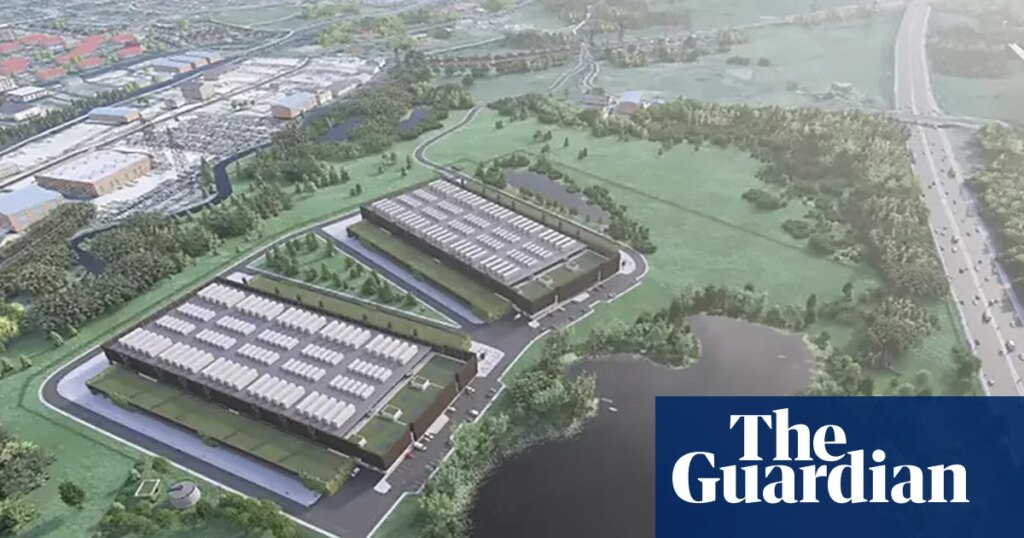
The approval, initially granted by Angela Rayner, the former deputy prime minister, came despite opposition from a local council. The project involved a hyperscale datacentre located on greenbelt land near the M25 in Buckinghamshire, in accordance with Labour’s commitment to facilitate quicker private investments in AI. However, her successor, Steve Reed, has since asserted that the decision to forego an environmental impact assessment was based on insufficient justification and that “permission should be quashed.”
During a legal challenge this week, the government acknowledged having made a “serious logical error” regarding the approval.
This scheme, referred to as the West London Technology Park, was touted by its proponents as an opportunity to secure £1bn in foreign direct investment. The recent reversal comes in response to environmental advocates, who have raised alarms over the excessive carbon emissions and substantial water consumption associated with energy-intensive datacentres, claiming that the initial approval was illegal.
Critics have accused the government of being overly complacent regarding the developer’s assurances about the project’s environmental repercussions and of failing to thoroughly evaluate the energy requirements associated with the datacentre.
This case signifies a setback to the government’s outlined strategy, which aims to accelerate the establishment of datacentres to attract investments from technology firms. In a move indicating their significance to the UK economy, the government designated datacentres—which are integral to training and running AI systems—as essential national infrastructure in September 2024. Peter Kyle, the former technology secretary, described them as “the engines of modern life, fueling the digital economy and safeguarding our personal information.”
The 72,000 square metre (18-acre) datacentre, which is being constructed on a former landfill site in Iver, is being developed by Greystoke, which has opted not to comment on the situation.
Rosa Curling, co-executive director of the tech equity organization Foxglove, expressed her frustration, stating, “It shouldn’t require us taking the government to court for them to acknowledge that their support for large tech’s environmentally harmful datacentres was fundamentally misguided.”
Curling further asserted that government ministers have prioritized the profits of billionaires affiliated with controversial political ideologies over the welfare of the British populace. She argued that this disregard was manifest in their decision to facilitate extensive datacentres, contradicting the interests of the local community, and with no regard for the potential devastating impacts on the environment.
Sonja Graham, chief executive of the environmental charity Global Action Plan, which participated in the legal challenge, stated, “This embarrassing retreat could have been circumvented if the government had fulfilled its responsibilities by rigorously examining the flimsy carbon commitments made by big tech right from the outset.”
She highlighted a growing unease among the UK populace regarding the increasing number of datacentres and their implications for water and power accessibility. Graham stressed that the government’s negligence in this matter does little to alleviate public concerns.
On Monday, the Ministry of Housing, Communities and Local Government confirmed to the court that the Secretary of State had decided to concede the challenge, indicating that the permission for the datacentre should indeed be revoked.
As of 2024, the UK possessed approximately 1.6 gigawatts of datacentre capacity, a figure projected to quadruple by 2030. However, this surge may still fall short of meeting the demand, according to government analyses.
Last year, Kyle criticized the “archaic planning processes” that have stalled the development of essential technology infrastructure. He lamented, “The datacentres we require to propel our digital economy are often obstructed merely for aesthetic reasons, such as obstructing the view from the M25.”
Quick Guide
Contact us about this story

The best public interest journalism relies on first-hand accounts from people in the know.
If you have something to share on this subject, you can contact us confidentially using the following methods.
Secure Messaging in the Guardian app
The Guardian app offers a mechanism to send tips about stories. Messages are encrypted end-to-end and are concealed within the routine activities of the app, thereby preventing any outside observers from realizing that you are in contact with us.
If you haven’t installed the Guardian app yet, you can download it for your device: iOS or Android. Once installed, navigate to the menu and select ‘Secure Messaging’.
SecureDrop, instant messenger, email, telephone and post
If you can use the Tor network safely, without the risk of being watched or tracked, you can also send messages and documents to the Guardian via our SecureDrop platform.
Lastly, for additional options, you can check our guide at theguardian.com/tips, which outlines various secure contact methods, including their advantages and disadvantages.
Illustration: Guardian Design / Rich Cousins
Interested in growing your brand with smarter solutions? Get in touch with Auctera today.

Jessica
https://www.linkedin.com/company/aucteraAffiliate Content Writer