Georgia spearheads initiative to prohibit data centers fueling America’s AI surge.
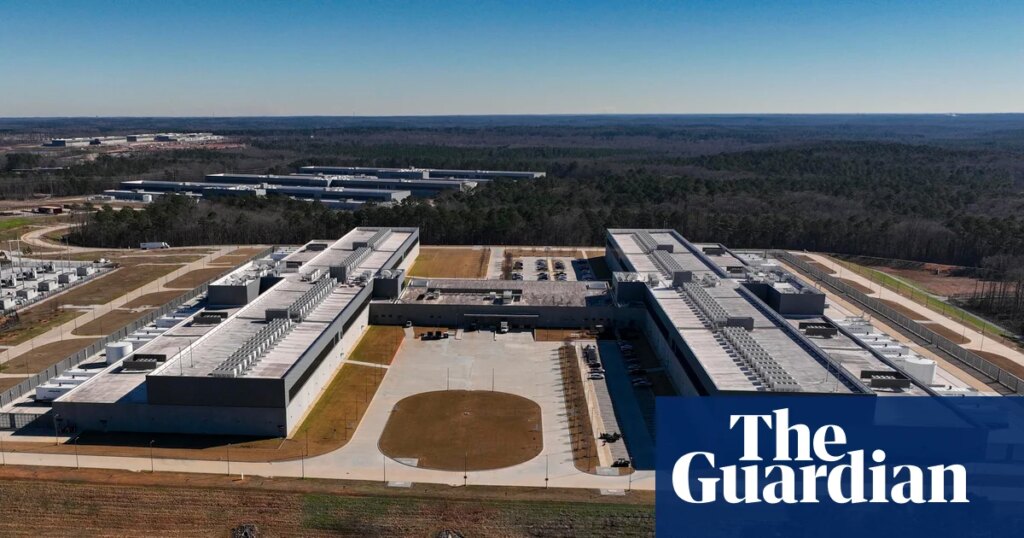
Lawmakers across multiple states are currently deliberating on the implementation of statewide bans on the construction of new datacenters. This development has surged as datacenters—known for their extensive demand for electricity—have become a focal point in discussions surrounding economic viability and environmental responsibility in the United States.
In Georgia, a state lawmaker has put forth a bill which, if passed, would establish a statewide moratorium on new datacenters, potentially making it the first of its kind in the nation. This proposed legislation is among at least three similar statewide moratoriums introduced within the last week, as legislators in Maryland and Oklahoma are also considering comparable measures.
Georgia has emerged as a critical battleground in the struggle against the unrestricted expansion of datacenters, which are especially notorious for their high consumption of resources such as energy and water—critical components in powering the burgeoning field of artificial intelligence.
The bill proposed by Georgia’s lawmaker aims to pause all such construction projects until March of the following year. “This time frame will allow state, county, and municipal officials to formulate regulations for datacenters that fundamentally change the landscape of our state,” explained Ruwa Romman, the Democratic state legislator sponsoring the bill.
This legislative effort coincides with Georgia’s Public Service Commission—the regulatory body that oversees Georgia Power—having recently given the green light to a plan that seeks to generate an additional 10 gigawatts of energy over the upcoming years. This represents the largest multi-year electricity demand approval in the Commission’s history, largely driven by datacenter requirements and primarily fulfilled through fossil fuels.
Interestingly, the Atlanta metropolitan area has been leading nationwide datacenter construction in 2024, further solidifying Georgia’s central role in this energy-intensive industry.
The rapid development trend has already prompted at least ten municipalities in Georgia to enact individual moratoriums on datacenter construction activities. Roswell, a suburb of Atlanta, has recently joined this list by approving such a ban earlier this month. Overall, municipalities in no less than 14 states have begun to adopt similar moratoriums, as noted by sources like Tech Policy Press.
Notably, Vermont’s independent Democratic Socialist senator Bernie Sanders also proposed a national moratorium last month.
“What we’re witnessing is communities gaining awareness of the aggressive expansion of this industry and desiring time to investigate potential risks thoroughly,” remarked Seth Gladstone, a spokesperson for the organization Food and Water Watch.
The swift proliferation of datacenters ignites various concerns among residents and activists alike, the foremost being the escalating costs of electricity. As Charles Hua, the founder and executive director of PowerLines, notes, “The public often associates datacenters with rising utility bills.”
Hua explained that this correlation can differ significantly based on the regulatory framework and market conditions within states. In Georgia, for instance, Georgia Power profits from new capital investments, which incentivizes continual construction of new power plants. As a result, electricity rates have surged by approximately one-third in recent years. He further noted that the utility company has little motivation to enhance grid efficiency, which could ultimately lower pricing.
Concerns regarding datacenter construction in Georgia are not limited to energy impact; there are significant issues related to water consumption and the loss of potential tax revenue. To combat rising utility costs, state Republicans have introduced legislation aimed at protecting consumers and eliminating tax breaks for datacenters. Additionally, a Democratic representative has proposed a measure requiring datacenters to publicly disclose their annual energy and water usage.
Aside from her legislative efforts, Romman is also campaigning for the gubernatorial position. If successful, she would become the first Palestinian American to occupy statewide office in Georgia, breaking the Republican hold that has persisted for almost 25 years.
Her bill, titled HB 1012, has garnered bipartisan support, including co-sponsorship from state representative Jordan Ridley. Ridley expressed his endorsement to allow local governments the necessary time to frame zoning regulations concerning datacenters, as he noted an upsurge in their construction throughout Georgia.
“Every local government possesses zoning codes that require public input. Developing those regulations takes time,” Ridley stated. However, he also acknowledged that while datacenters are a source of tax revenue and high-paying employment, he does not oppose their existence outright.
Romman’s moratorium proposal extends beyond mere policy; it carries substantial political weight as well. In her statement, she indicated that the proposed halt would afford Georgians the opportunity to vote on the majority of Public Service Commission seats responsible for making ultimate decisions on energy projects.
Georgia belongs to a select group of ten states that elect utility regulators. Following the November elections, voters succeeded in placing progressive Democrats Alicia Johnson and Peter Hubbard on the five-member commission, concluding nearly two decades of Republican control. A significant seat is on the ballot this November.
The underlying consideration is that, should the commission achieve a Democratic majority, it would limit the unopposed approval of electricity requests from Georgia Power aimed at tech companies pursuing datacenter development.
In his capacities on the commission, Hubbard penned an editorial regarding Georgia voters’ perceptions, asserting, “They see datacenters receiving tax breaks as their power bills rise. They see local communities struggling with the competition for water supplies and the impact of high voltage transmission lines on property values. They also observe the PSC consistently green-lighting every request from the monopoly electric utility.
“This is the catalyst behind the growing opposition to datacenters in Georgia; residents oppose being treated as collateral damage by the unregulated growth of datacenters, which raises their power costs even further.”
The political implications of Romman’s bill extend even further. Paul Glaze, a spokesperson for Georgia Conservation Voters, remarked that should the bill be passed from the House to the Senate, “it might serve as an early indication of what to expect in the general election later this year.”
“The critical question remains: who will voters trust in communities where datacenters are being developed?” Glaze pointed out. “Every individual seriously contemplating a statewide position needs to have a well-defined stance regarding this issue.”
Interested in growing your brand with smarter solutions? Get in touch with Auctera today.

Jessica
https://www.linkedin.com/company/aucteraAffiliate Content Writer