Data center developers urged to reveal impact on the UK’s net emissions.
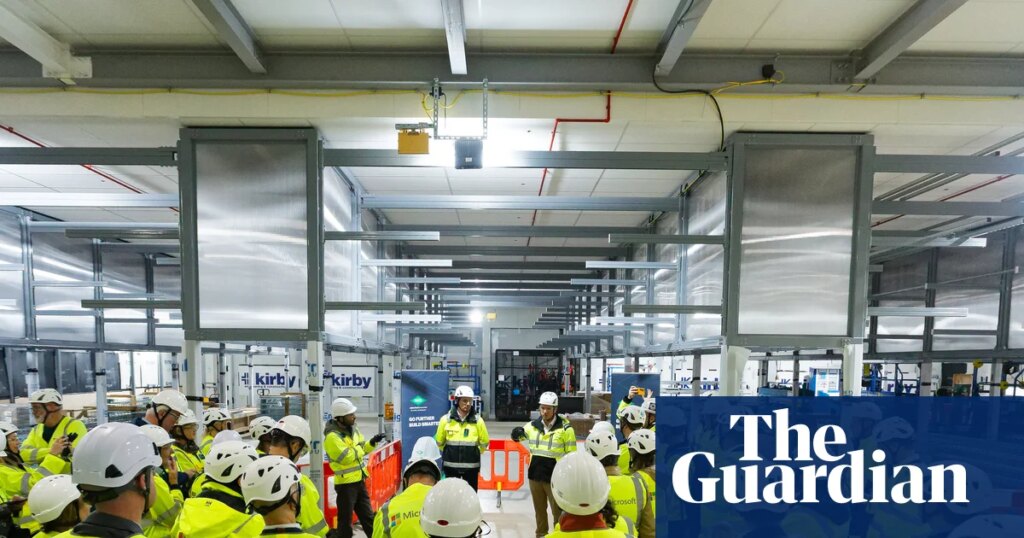
Developers of datacentres in the UK are currently facing mounting pressures to clarify the environmental impact of their projects, specifically whether they will contribute to an increase in the country’s net greenhouse gas emissions. There are widespread worries that the energy demands associated with these facilities might potentially double national electricity consumption.
In light of these concerns, various campaign organizations have addressed a letter to the UK Secretary of State for Technology, Liz Kendall. They caution that the energy requirements generated by the advancement of AI infrastructure pose a “serious threat to efforts aimed at decarbonizing the electricity grid.”
The letter urges developers to provide evidence that their proposed projects will not lead to an increase in the UK’s overall CO2 emissions, nor exacerbate local water shortages. This request is made in anticipation of an upcoming national policy statement (NPS) concerning datacentres.
Campaigners assert, “Without these commitments, such vast electricity use will inevitably generate vast climate emissions.”
The letter has been co-signed by Foxglove, a group dedicated to campaigning against the dominance of large tech companies, alongside five other non-governmental organizations, including the environmental advocacy group Friends of the Earth.
Recently, members of the environmental audit committee have announced an inquiry focused on the environmental sustainability of datacentres. Concurrently, energy secretary Ed Miliband acknowledged that the future energy requirements projected from these facilities remain “inherently uncertain.” As the UK strives toward its target of achieving net zero emissions by 2050, it is crucial to balance total greenhouse gas emissions with the amount the UK can effectively remove from the atmosphere.
Ofgem, the energy regulator for Great Britain, has articulated that the energy demands from new datacentre projects could surpass the current peak of national electricity consumption. According to a consultation released this month, approximately 140 new datacentre proposals related to artificial intelligence could require up to 50GW of electricity—5GW more than the current peak demand across Great Britain.
Specific projects, like those planned for Elsham in Lincolnshire and Cambois in Northumberland, are expected to have electricity demands of 1GW each—equivalent to the output of a nuclear power station. This necessitates the development of new renewable energy sources to meet these demands.
The UK is currently experiencing a boom in datacentre construction, fueled by significant investments related to AI. Such datacentres act as the backbone of AI applications, including tools like chatbots and image-generating systems. However, they place considerable demands on both power and water for cooling systems.
Campaigners have also highlighted the anticipated environmental impact of a new Google datacentre in Essex, projected to emit more than half a million tonnes of carbon dioxide annually, a figure comparable to the emissions resulting from approximately 500 short-haul flights each week.
The letter stresses the urgency of establishing a comprehensive framework to assess the environmental consequences of datacentre operations, alongside making sure that developers contribute to the construction of renewable energy infrastructure related to their proposals.
The UK has set an ambitious goal of creating a nearly carbon-free power system by 2030, an objective that is currently under scrutiny due to concerns over the escalating costs of electricity in the country.
In the campaigners’ letter, they also call for measures to eliminate instances of “greenwashing.” This practice may include circumventing the expansion of new green energy capabilities by merely purchasing renewable energy certificates. These certificates indicate a company’s investment in green power equivalent to part of their energy consumption, despite the energy being drawn from the overall grid, which predominantly includes power generated from fossil fuels.
In response, a government spokesperson acknowledged that datacentres play a crucial role in driving economic growth and are integral to tackling environmental challenges. They assured that recent initiatives are underway to facilitate the sourcing of renewable power for these projects.
“Datacentres will increasingly transition to renewable energy sources, and our AI energy council is actively exploring avenues to attract investment in new clean energy solutions for the sector, while also ensuring that the planning system effectively considers water scarcity,” the spokesperson stated.
Interested in growing your brand with smarter solutions? Get in touch with Auctera today.

Jessica
https://www.linkedin.com/company/aucteraAffiliate Content Writer