Conflict over data center politics at the core of North Carolina primary
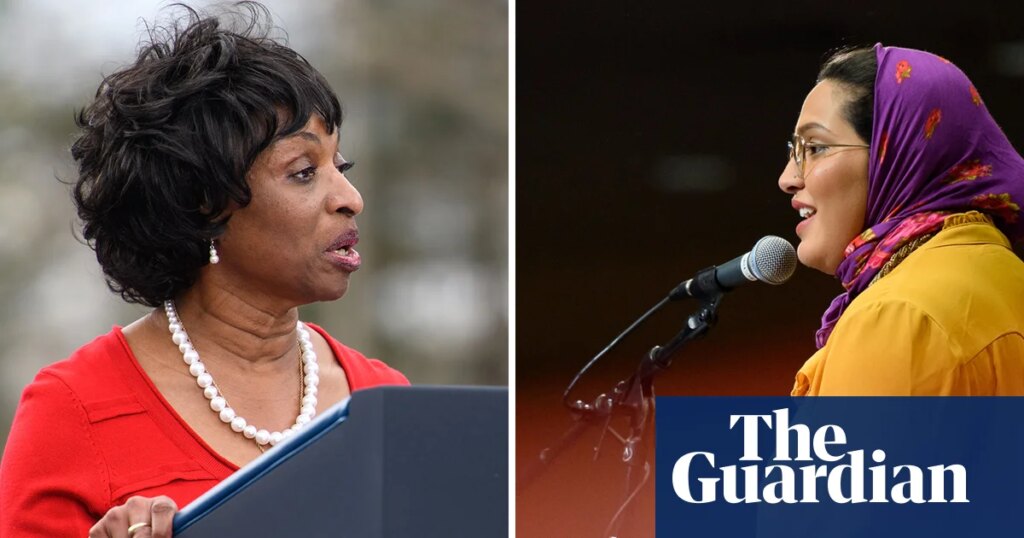
The upcoming North Carolina congressional primary scheduled for Tuesday serves as a critical battleground in the realm of datacenter politics. This emerging conflict is increasingly influencing elections across the United States.
In the Durham-area’s fourth district, Congresswoman Valerie Foushee is vying for her third term against progressive contender Nida Allam, a Durham County commissioner who previously faced defeat to Foushee in the 2022 election.
This contentious rematch unfolds against the backdrop of a significant datacenter controversy within the district. Allam has ardently opposed a massive proposed facility and advocates for a federal moratorium on datacenters. Conversely, Foushee has stated that while she does not endorse the new development, decisions about datacenters should rest with local authorities rather than federal ones.
Up until mid-February, Allam’s fundraising efforts far surpassed those of Foushee, largely due to contributions from political action committees (PACs) such as Justice Democrats and gun control advocate David Hogg’s Leaders We Deserve. However, the last two weeks have seen a dramatic shift as prominent PACs have rallied to support the incumbent.
At the forefront of this shift is the Jobs and Democracy Super PAC, which has as its sole disclosed donor the AI company Anthropic, known for producing the AI model Claude. Since February 21, this PAC has contributed approximately $1.6 million to Foushee’s re-election campaign.
Despite the fact that Anthropic has no public links to the local datacenter initiative, community opposition to the proposed facility has led many local residents to be wary of political funding associated with large technology companies.
Anthropic has positioned itself as safety-focused. Recently, the company garnered attention for rejecting a request from the Pentagon for unrestricted use of its products, though reports indicate that its tools have been used in military strikes against Iran following a military operation. The company has supported various state AI protections and played a role in defeating a federal ban on state-level AI regulations.
As a part of the broader Public First Action network, the Jobs and Democracy Super PAC was established to advocate for leaders committed to safeguarding children, families, workers, and national security from the dangers posed by unregulated AI, as stated by spokesperson Anthony Rivera-Rodriguez in an email.
Nonetheless, the notion that a technology-driven group would support candidates willing to enforce meaningful AI regulations is perceived as absurd by Allam.
“That’s akin to letting my kids dictate their own bedtime,” she remarked in an interview with the Guardian.
An open letter has garnered signatures from hundreds of residents, urging candidates in the fourth district to reject the proposed datacenter and refuse contributions from major tech PACs.
Allam, who endorsed the letter, declared that it is “a badge of honor” for her that big tech considers her a threat.
In a recent event, when a high school student challenged Foushee on whether she would accept funding from the AI sector, her response was noncommittal, stating: “I have not made any pledge.”
In follow-up communications, Foushee reinforced her stance by indicating, “I do not coordinate with Super PACs in any manner” and committed to advocating for datacenter regulations in Congress.
“I have long been committed to holding oligarchs and large corporations accountable in Congress,” she emphasized. “My principles will never waver.”
A Datacenter Showdown
Foushee’s funding from Anthropic has faced intense backlash from constituents opposed to a proposed datacenter by Maryland-based Natelli Investments, which aims to construct a sprawling 190-acre facility near Apex, situated 20 miles southwest of Raleigh.
The developer has yet to disclose which companies would utilize the facility.
This proposal has sparked considerable opposition due to concerns about energy consumption, water use, and a potential rise in toxic emissions. Over 5,000 residents have signed a petition denouncing the plan.
“The implications for electricity use, water consumption, air quality, public health, and noise pollution are significant,” stated Michelle O’Connor, a resident approximately 1.5 miles from the proposed site, who holds a PhD in health sciences. “I have not found a compelling reason to support this idea for Apex.”
The two Democratic candidates have taken distinct stances on this issue. Foushee, who has received endorsements from the Congressional Progressive Caucus, North Carolina Governor Josh Stein, and the League of Conservation Voters, maintains that while she personally opposes the Apex proposal, decisions should remain with local officials.
“I empathize with my constituents’ concerns. Protecting the local environment and community’s electrical costs is essential,” she remarked to the Guardian. “I trust local leaders to make the right decision and wish to avoid meddling in their affairs.”
In contrast, Allam asserts that federal officials must take action to mitigate AI’s rapid proliferation. With a background as a former state Democratic party leader and a staff member for Bernie Sanders in 2016, she has garnered endorsements from groups like Sunrise Movement and Justice Democrats. Allam has actively protested against the Apex proposal. In response to Chatham County’s recent enactment of a datacenter moratorium, Allam celebrated the policy as a significant victory.
Allam, alongside Sanders, is advocating for a ten-year nationwide moratorium on datacenters. This hiatus would enable lawmakers to formulate requirements for facilities to recycle their water and invest in sustainable energy solutions like solar power, which would help mitigate local bill increases, resource scarcity, and climate repercussions.
“Implementing these measures is crucial, or our working-class neighbors will bear the brunt of the consequences,” she asserted.
Jobs and Democracy representatives informed the Guardian that they support leaders who prioritize voter interests over the influence of big tech. Spokesperson Anthony Rivera-Rodriguez noted that Foushee has consistently voiced opposition to the datacenter proposal in her area, aligning with the support offered by their organization for leaders willing to confront unregulated AI.
Both the Super PAC and Foushee argue that it is essential for states and localities to make decisions on datacenter approvals rather than federal lawmakers. Foushee cautioned that a national moratorium could lead to negative ramifications, such as hindering the establishment of data infrastructure necessary for hospitals.
While she insists that local leaders should drive the decision-making process, Foushee has pledged to push for regulations surrounding datacenters, including innovative land-use policies aimed at holding corporations accountable for their environmental impact and local costs, especially as Democrats seek to reclaim congressional majority.
Allam contends that Foushee’s stance primarily shifts responsibility to state leaders, who may encounter limitations imposed by federal regulations, thus emphasizing the need for stronger federal governance in this sphere.
In December, Foushee was appointed as co-chair of a new bipartisan AI commission. Additionally, the Jobs and Democracy PAC has also financed ads promoting another co-chair of the commission, New Jersey Representative Josh Gottheimer.
At a recent commission meeting, Foushee expressed concern regarding allegations that Anthropic had loosened key safety commitments under pressure from officials in the Trump administration, calling for a shift in Washington’s behavior rather than that of the company. Furthermore, she has urged tech companies to provide transparency on how AI’s role influenced recent job layoffs and highlighted the sector’s environmental implications.
“Congress must implement clear regulations to ensure datacenters do not negatively affect our environment,” she asserted.
Critics, however, argue that accepting funds from technology-linked Super PACs undermines her advocacy.
“It’s impossible for her to genuinely represent our interests if she relies on their money for her political survival,” claimed Usamah Andrabi, communications director for Justice Democrats.
Victoria Plant, an organizer with the Sunrise Movement, criticized Foushee, stating that she has “failed to propose substantial regulations to curb unchecked expansion.”
During the previous election cycle in 2022, Foushee also faced scrutiny for accepting financial support from the pro-Israel lobby and a Super PAC linked to the now-disgraced cryptocurrency mogul Sam Bankman-Fried, who was later convicted of fraud. In response to the controversy, Foushee pledged to donate contributions connected to Bankman-Fried to a non-profit, and this year she stated that she will not accept further funding from the pro-Israel lobby.
Money in Politics
The proposed Apex datacenter highlights a growing concern over AI’s rapid expansion, according to Allam. At peak capacity, this project may require up to 1 million gallons of water daily—approximately one-fifth of the town’s average usage, as reported by local officials. Natelli has asserted that the facility will not impact drinking water supplies and complies with local policies and regulations.
The facility’s energy demands are estimated to be around 300 megawatts—about three times the annual energy consumption of Apex and neighboring New Hill combined, according to Bill Dam, a retired environmental scientist living two miles from the proposed site.
“This project is not beneficial to our community,” he contended.
The facility would obtain power from a nearby nuclear plant and utilize 100 diesel generators as backup. Dam cautioned that frequent reliance on these generators for grid stabilization during peak demand could result in harmful emissions contributing to pollution and climate change.
Even though the developers claim the project will unlikely cause any rise in energy bills, datacenters have been associated with price increases in North Carolina, as Allam pointed out.
Echoing other residents, Foushee conveyed her concerns about “local water consumption, escalating electrical expenses, and pollution” stemming from the Apex proposal.
Allam believes that community skepticism towards Foushee’s commitment to these issues is warranted.
“You cannot expect residents to trust that you will regulate an industry that supports you financially,” she asserted.
She further stated that while she does not contend that lawmakers should attempt to completely halt AI’s growth, “the United States should be a frontrunner in AI,” emphasizing that it must be pursued in a manner that serves community interests.
Interested in growing your brand with smarter solutions? Get in touch with Auctera today.

Jessica
https://www.linkedin.com/company/aucteraAffiliate Content Writer