Bezos’s Blue Origin reveals intentions to launch thousands of satellites by 2027.
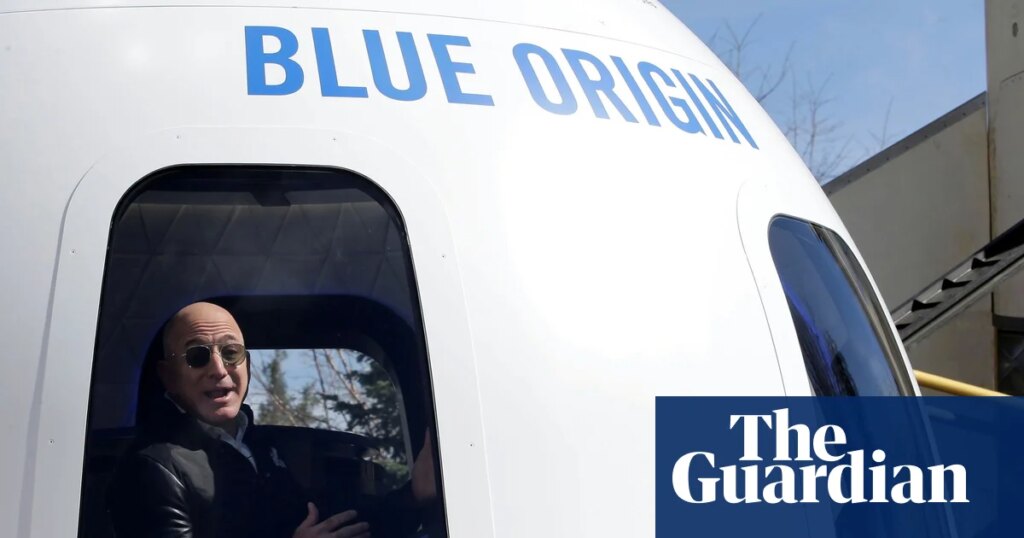
On Wednesday, Jeff Bezos’s space venture Blue Origin unveiled a groundbreaking initiative to launch a fleet of 5,408 satellites aimed at establishing a comprehensive communications network. This ambitious project seeks to serve a diverse range of clients, including data centers, various governmental bodies, and businesses, thereby entering a market currently dominated by Elon Musk’s SpaceX.
The deployment of these satellites is projected to commence in the final quarter of 2027, as per the announcements made by Blue Origin. The network is designed to boast data speeds that could reach up to 6 terabits per second (Tbps) from virtually any location on Earth. This remarkable speed, achievable thanks to advanced optical communications technology, positions the network as a vital solution for data processing as well as extensive government initiatives. Blue Origin estimates that the network will have the capacity to accommodate approximately 100,000 users.
The announcement regarding TeraWave arrives amidst a surge of activity within the space industry, as many companies race to develop space-based data centers capable of meeting skyrocketing demands for heavy AI data processing. Traditionally, such processing on Earth consumes tremendous amounts of energy and resources, especially as the adoption of these technologies increases.
This new satellite communication network adds yet another constellation to Jeff Bezos’s portfolio, alongside Amazon’s ongoing project known as Project Kuiper, now rebranded as Leo. This effort involves the deployment of 3,200 satellites, aimed primarily at providing internet access to both consumers and businesses.
In contrast, Musk’s Starlink network, which encompasses around 10,000 satellites, is currently leading the global initiative to establish internet infrastructure in space. The constellation of low-orbiting satellites not only offers enhanced security but also provides faster connection speeds compared to traditional satellites that orbit at higher altitudes.
Elon Musk has made it known that he plans to develop space-based data centers to support the Starlink network further. On the other hand, Bezos envisions that such facilities in orbit will become a commonplace reality within the next one to two decades.
Starlink has successfully amassed over 6 million customers in at least 140 countries, targeting individual consumers alongside businesses and governmental organizations. Its Starshield variant is specifically aimed at US national security agencies. Conversely, Amazon’s Leo project has already placed 180 satellites in orbit, strategizing similarly when it comes to customer outreach.
Several Chinese companies are also making significant strides to establish their own satellite networks, attempting to catch up with the advancements made by Starlink. These firms are focused on the rapid development of reusable rockets capable of launching thousands of satellites at competitive costs, following a model initially established by Musk’s SpaceX, particularly through the use of its reusable Falcon 9 rocket.
Central to the success of TeraWave’s deployment will be Blue Origin’s reusable New Glenn rocket, which has had two launches but has faced challenges in achieving a swift flight rate.
Interestingly, Blue Origin’s planned network appears to be targeted primarily towards enterprise users, suggesting that individual consumers may not have access. This is in stark contrast to the consumer-oriented approach adopted by Starlink.
In its official announcement, Blue Origin stated: “TeraWave enterprise-grade user and gateway terminals can be rapidly deployed worldwide and interface with existing high-capacity infrastructure, providing additional route diversity and strengthening overall network resilience.” However, the specifics of which current infrastructures can be integrated with the new network remain somewhat ambiguous.

Jessica
https://www.linkedin.com/company/aucteraAffiliate Content Writer