The Great AI Job Exchange: Why Professionals Are Leaving Their Careers Behind
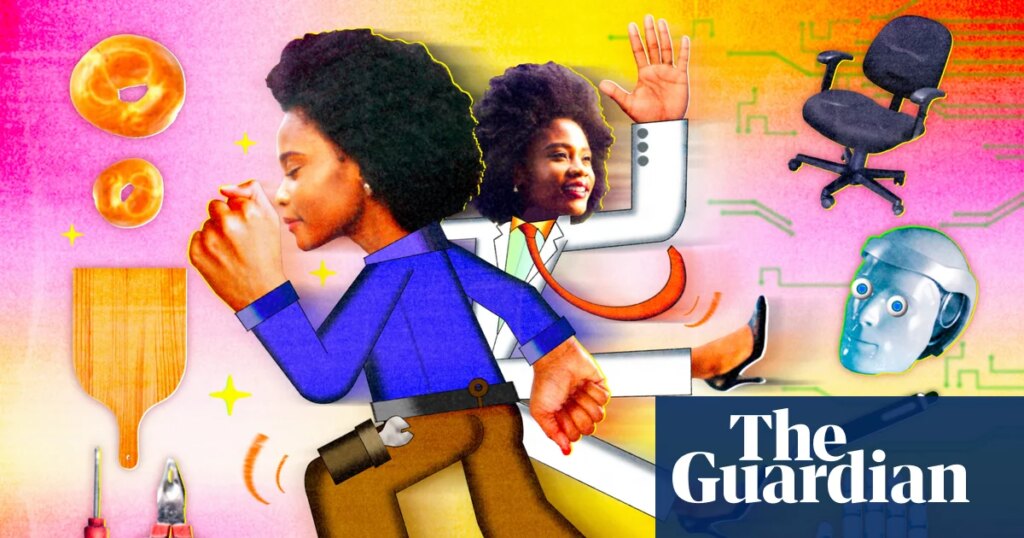
California’s Jacqueline Bowman knew from a young age that she wanted to be a writer. She secured her first internship at 14 with a local newspaper and pursued a journalism degree at university. Although she struggled to earn a full-time living as a fiction writer after graduation, she found work mainly in content marketing and some journalism. By the time she hit 26, she transitioned to full-time freelance work. While content marketing wasn’t her dream, it provided her with a daily writing practice and helped pay the bills, which made her reasonably content.
“But everything changed in 2024,” says Bowman, now 30. Layoffs and the closing of many publications led to a significant drop in her workload. “I began receiving inquiries from clients about AI,” she explains. Some clients even audaciously remarked on how “fantastic” it was that they wouldn’t need writers anymore. She was then offered a role as an editor, tasked with refining AI-generated content. The premise was that editing this content would take less time than creating it, resulting in a reduced fee—nearly half of what she once earned. Ironically, the reality turned out to be quite the opposite.
“Now I had to thoroughly fact-check everything in the articles, and about 60% of it was just fabricated,” she states. “I ended up rewriting most of the article anyway. Tasks that usually took me two hours when writing from scratch now took four hours, yet I was making half the amount.”
To make matters worse, some of her remaining clients occasionally accused her of utilizing AI in her writing. “I never use AI for my work,” she firmly asserts, yet she acknowledges that AI-generated text occasionally resembles her own, possibly due to large language models being trained on her past writings. Legal recourse against tech giants, however, is not an option for her, though she is appreciative of authors like George Saunders and Ta-Nehisi Coates who have taken action.
By January 2025, Bowman faced the grim reality of being unable to afford health insurance, solidifying her growing uncertainty: “I realized that a career in writing might no longer be feasible.” Consequently, she moved up her wedding plans, marrying her partner early to gain access to his health insurance plan, although they still planned for a larger celebration in March. However, she recognized that a more drastic career change would be necessary soon.
Bowman recalled an enjoyable psychology elective from her college days and contemplated the potential of becoming a therapist for a more stable income. She admits it’s “not entirely AI-proof”—there are AI-powered therapy services already on offer. “But some individuals might think, ‘AI ruined my job—what do I look like talking to an AI therapist?” she reflects. “So in that regard, I trust there will continue to be a market for human therapists.”
Determined to make a change, Bowman decided to retrain “while I still have some work” and has returned to university to study marriage and family therapy. She feels “incredibly lucky” to have her husband’s support and any remaining writing gigs to keep afloat, although loans have become necessary. Enjoying her studies now, she acknowledges that this path would not have been considered had her writing prospects not diminished so considerably.
Similarly, Janet Feenstra has made the shift from academic editor to baker in Malmö, Sweden. The transition stemmed from fears about AI rendering her previous career obsolete. “In a way, I feel I should be grateful to AI for prompting this change,” she concedes, working at a charming bakery where she finds joy in rolling out dough by hand.
“We dance and sing when we want,” she enthuses, admitting she now enjoys her work much more, though she struggles with feelings of bitterness. It feels less like a chosen career path and more a forced one, as she now faces longer commutes and a physically demanding workload with lower pay after years spent as a freelance editor and language editor at Malmö University.
Feenstra had operated as an editor since 2013, providing specialized language editing for academic texts. However, discussions about AI at her university alarmed her. “It was unsettling; I sensed the writing on the wall,” she shares, realizing that if a manuscript was already solid, AI could potentially take over her job. “I knew I had to act before it became too late,” she states.
Having to move out due to rising rent costs further complicated Feenstra’s transition, forcing her kids to reside with their father full-time. As she completed a year-long culinary training, she stayed with her partner in a cramped flat. However, after five months in the bakery, she has secured a new apartment that accommodates her children, marking a significant achievement for her.
Feenstra noted, “It’s fascinating to trace my journey from a typically upper-class job to one now perceived as working-class.” Her reflections indicate that “White-collar work isn’t all it’s cracked up to be.” She acknowledges that identity often ties closely to career choices, a sentiment echoed by many transitioning workers.
This reassessment of ‘good’ jobs may be on the horizon. A report published in 2023 by the UK Department for Education emphasized how job roles with clerical responsibilities in sectors like finance, law, and business management are more vulnerable to AI disruption. There has been a noticeable increase in individuals seeking vocational training in fields such as engineering and culinary arts, largely influenced by the real fears stemming from automation.
After spending 15 years moving up the ladder in health and safety roles, Richard, a chartered professional in Northampton, decided to pivot to electrical engineering. Although health and safety roles remain critical—especially since AI cannot legally assume the duties of responsible parties—Richard observed AI’s growing role in the field when it was employed to draft policies and safe working systems. “If a significant portion of an occupational health and safety professional’s duties could become automated, I knew I needed to change gears early,” he explains.
Despite financial struggles and a pay cut since starting in electrical engineering, Richard finds satisfaction in knowing his new role also revolves around safety and secure practices. He acknowledges that with experience, he can return to the income level of his previous job. However, he remains cautious about the growing trend of automation impacting even skilled trades, noting the relevance of choosing roles with a high degree of hands-on problem solving and craftsmanship.
Carl Benedikt Frey, an associate professor at the Oxford Internet Institute, affirms that manual labor is less likely to be entirely automated. Still, he believes that AI’s reach could extend into various sectors, including trades eventually. He cautions against acting too hastily based on hypothetical futures, suggesting it’s essential to pay attention to actual labor market developments.
The ongoing discourse around the rising influence of AI on jobs will likely continue to evolve. Emerging businesses are looking to integrate AI into various functions, but the demand for human judgment and interaction remains critical. As more professionals face career changes, the necessity for adaptability and skill acquisition becomes ever more pressing. All in all, the future of work in an AI-dominated landscape remains uncertain, urging individuals to reevaluate their careers with foresight and strategy.
Interested in growing your brand with smarter solutions? Get in touch with Auctera today.

Jessica
https://www.linkedin.com/company/aucteraAffiliate Content Writer