The Digital Takeover of Heartland States: The Impact of Data Centers on Rural Communities
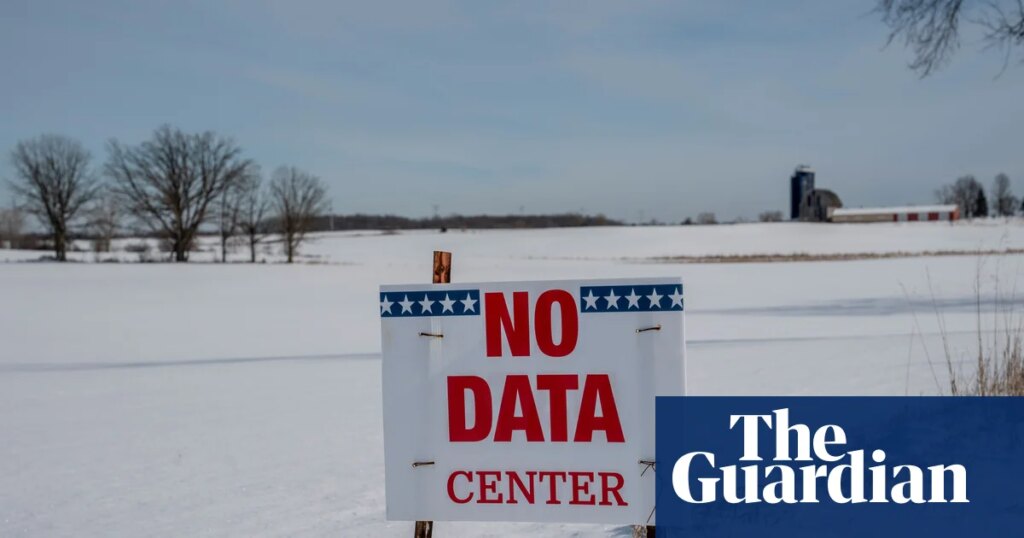
Wilmington, Ohio, resident Quintin Koger Kidd has been increasingly alarmed by what he perceives as serious misconduct among local public officials, including alleged violations of open meeting laws. This concern led him to file a complaint in court seeking the removal of the mayor and city council members from their positions in June. His discontent escalated further upon learning that the city council supported a proposal by Amazon Web Services to build a massive $4 billion data center on 500 acres south of town. This project, which requests a 30-year tax abatement in exchange for contributions towards local schools and infrastructure, raised alarms for Koger Kidd.
“The people on the city council are in many respects good individuals who genuinely care about our community,” he expressed, pointing out that they appear to be overawed and taken advantage of by such multinational corporations. “It feels like the digital colonization of flyover states is well underway.”
For years, managing small towns in the U.S. usually revolved around basic tasks: zoning changes, road repairs, and waste management. Nevertheless, the emergence of data center developments is creating a troubling schism between local administrators, who are crucial to rural America, and the constituents they represent. This shift has only intensified grievances that locals harbor against their representatives.
Across many small communities in the U.S., residents are voicing accusations against their local officials for neglecting public input and seemingly profiting from the presence of data centers—creating a sense of deepening mistrust in local governance.
Recent incidents illustrate the rising tensions. In December, for instance, three individuals were arrested at a council meeting in Port Washington, Wisconsin, when an altercation broke out regarding a proposed data center in the town of 12,000 residents. Furthermore, a meeting a month earlier in DeKalb County, Georgia, required police escorts to manage rising tensions around data center regulations.
The simmering anger indicates a crisis within local government dynamics. Just last year, the mayor and a council member in Ashville, a small community south of Columbus, Ohio, resigned abruptly following backlash against plans for a new EdgeConneX datacenter. The sudden departures left the small town of under 5,000 residents grappling with an administrative vacuum.
Other small towns across regions such as Minnesota and Michigan have similar narratives where experienced officials are resigning to escape the vitriol towards data center projects.
In Saline Township, Michigan, a small community of 2,270 people, local officials voted last September against rezoning a piece of agricultural land for a large project spearheaded by tech giants Oracle and OpenAI. Residents breathed a sigh of relief, believing they had thwarted plans for a massive data center. However, their hope was short-lived as developers quickly took legal action, alleging the township was engaging in “exclusionary zoning,” which is illegal in Michigan.
This conflict prompted township leaders to settle the lawsuit, paving the way for a construction project of a 1.4 gigawatt, $7 billion data center that could strain local electricity demands in exchange for some relatively modest community benefits.
“In my 50 years of municipal law practice, this is perhaps the most divisive issue I have encountered,” remarks Fred Lucas, the attorney for Saline Township. “It’s been a nightmare. Every public meeting turns into a platform where people are demanding resignations. I have come to regret engaging with data storage facilities.”
Tensions have turned into lawsuits, with some locals suing township officials for allegedly infringing upon Michigan’s open meetings act by making clandestine decisions without public votes.
Despite promises of creating 2,500 unionized construction jobs and additional job opportunities within the wider community, Related Digital has been tight-lipped on their role in the ongoing controversies surrounding their proposed project. “We are only developing on 250 acres of our 1,000 acres, preserving 75% for open space, farmland, and wetlands,” stated Natalie Ravitz, a spokesperson for the developer.
Experts suggest that the communication void between local residents and data center firms stems from the multi-dimensional challenges of introducing large corporations to close-knit communities. Nicol Turner Lee, director of the Center for Technology Innovation at the Brookings Institution, noted, “Both parties often miss each other’s point when discussing the benefits and harms linked to these data centers. Large companies have been given political leeway to push their agendas without much regard for small-town values.”
While property owners argue they have the right to use their land as they see fit, many residents in Wilmington are skeptical about the rapid changes. Reports indicate that the Amazon Web Services project is set to provide 100 permanent jobs with a payroll of $8 million. The community had previously been devastated by the closure of a DHL Express facility in 2009, which led to the loss of over 8,000 jobs, deepening economic despair.
However, opposing sentiments are growing in neighborhoods throughout Wilmington, with many frustrated citizens placing signs against the data center in their yards. Some locals claimed the first they learned about the new project was during a school board meeting that took place at an early hour, approving a compensation deal with Amazon. Moreover, the Wilmington City Council aims to rezone an additional 545 acres to facilitate further data center constructions.
A parcel of agricultural land near the proposed data center site has seen its price skyrocket from under $10 million in 2021 to $21 million last August. Interestingly, city council records indicate that some of this property is partly owned by a council member, who has not responded to inquiries regarding these developments.
Standing near a burgeoning housing development adjacent to the proposed site, Koger Kidd, an admitted user of AI applications, notes the proximity of the site to residential neighborhoods. “Backup generators could create considerable noise,” he warned, expressing concern for the residents’ quality of life.
Despite attempts to garner information, Amazon Web Services and Wilmington’s city council did not respond to inquiries from the Guardian.
Interested in growing your brand with smarter solutions? Get in touch with Auctera today.

Jessica
https://www.linkedin.com/company/aucteraAffiliate Content Writer