Leading Expert Warns That AI Race Poses a Real Risk of Hindenburg-Style Catastrophe
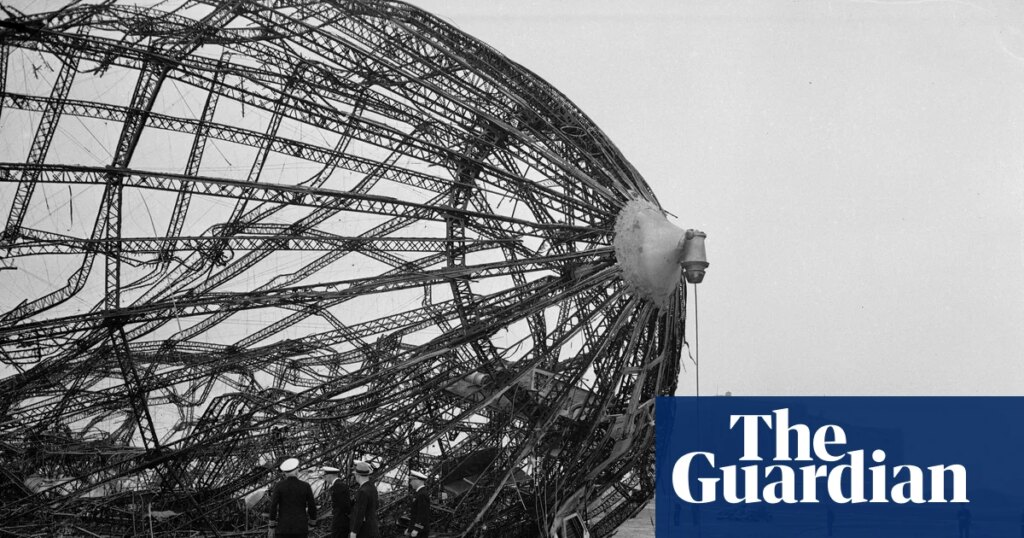
The race to bring artificial intelligence (AI) to market has escalated concerns about potential disasters reminiscent of the Hindenburg, which could undermine global trust in this transformative technology, warns a prominent researcher. Michael Wooldridge, a leading AI professor at Oxford University, highlights the growing peril arising from the considerable commercial pressures that force technology companies to launch AI innovations, often without a comprehensive understanding of the products’ capabilities and potential shortcomings.
According to Wooldridge, the rapid proliferation of AI chatbots with feeble safeguards illustrates how commercial incentives often take precedence over careful development and thorough safety testing. This prioritization leads to a scenario where products are released prematurely, increasing the chances of unforeseen consequences. “It’s the classic technology scenario,” he stated. “You’ve got a technology that holds immense promise, yet it lacks the rigorous testing expected, compounded by unbearable commercial pressures.”
Wooldridge, who is set to present the Royal Society’s Michael Faraday prize lecture titled “This is not the AI we were promised” on Wednesday evening, cautioned that a “Hindenburg moment” is increasingly plausible as companies hastily deploy more sophisticated AI tools. This reference alludes to the Hindenburg airship tragedy of 1937, which dramatically altered perceptions of air travel.
The Hindenburg, measuring 245 meters, was involved in transatlantic flights and faced disaster while attempting to land in New Jersey when it erupted in flames, resulting in the tragic deaths of 36 individuals, including crew, passengers, and ground personnel. The flames ignited as a spark caught the 200,000 cubic meters of hydrogen gas that kept the airship aloft. Wooldridge emphasizes that, similar to the aftermath of the Hindenburg disaster that effectively extinguished global enthusiasm for airships, a comparable incident in AI could have dire repercussions for its future acceptance and advancement.
He elaborated that AI is deeply integrated into various sectors, implying that a significant incident could catalyze disruptions across numerous industries. Wooldridge envisions scenarios such as a fatal software update in self-driving vehicles, an AI-driven cyberattack that disrupts airline operations globally, or even a catastrophic financial collapse akin to the historical downfall of Barings Bank, all precipitated by AI missteps. “These are very plausible scenarios,” he reiterated. “There are countless ways AI could catastrophically fail.”
Despite these emerging concerns, Wooldridge clarifies that his intention is not to criticize contemporary AI technologies. Rather, he seeks to highlight the disparity between the expectations held by researchers and the capabilities of existing AI systems. Many experts had anticipated AI that would systematically compute solutions and provide answers that were sound and complete. However, he points out, “Contemporary AI is neither sound nor complete; it is, in fact, very approximate.”
This limitation stems from the operations of large language models that form the backbone of current AI chatbots, which generate responses based on the sequential prediction of words or parts of words, drawn from probability distributions gleaned during training. As a result, these AI systems exhibit jagged capabilities: displaying exceptional proficiency in some tasks, while performing poorly in others.
Wooldridge notes that a significant issue is that AI chatbots can fail in unexpected manners, and they are unaware when they provide incorrect information. Furthermore, they are programmed to deliver confident responses, which can mislead users, particularly when presented in a human-like or overly agreeable manner. The risk is that individuals might begin to treat AI systems as sentient beings. In a 2025 survey conducted by the Center for Democracy and Technology, nearly one-third of students reported having experienced romantic relationships with AI systems.
“Companies aim to portray AIs in an exceptionally human-like fashion, but I believe this represents a perilous avenue,” Wooldridge cautioned. “It is crucial to recognize that these are merely sophisticated tools, no more than advanced spreadsheets.”
Wooldridge draws inspiration from the portrayal of AI in early science fiction, notably in the original Star Trek series. In one particular 1968 episode titled “The Day of the Dove,” Mr. Spock consults the Enterprise’s computer, only to receive a distinctly non-human response: it conveys that it has insufficient data to provide an answer. Wooldridge comments, “We’re left with overconfident AIs that assert, ‘Yes, here’s the answer,’ which is a stark contrast.” He suggests that it may be more beneficial for AIs to communicate in a manner reminiscent of the Star Trek computer, ensuring users do not mistake them for human beings.
Interested in growing your brand with smarter solutions? Get in touch with Auctera today.

Jessica
https://www.linkedin.com/company/aucteraAffiliate Content Writer