Is This Man Music’s Next Innovator or Its Demise? AI Advocate Mikey Shulman Claims He’s Creating Quality Pop, Not Rubbish.
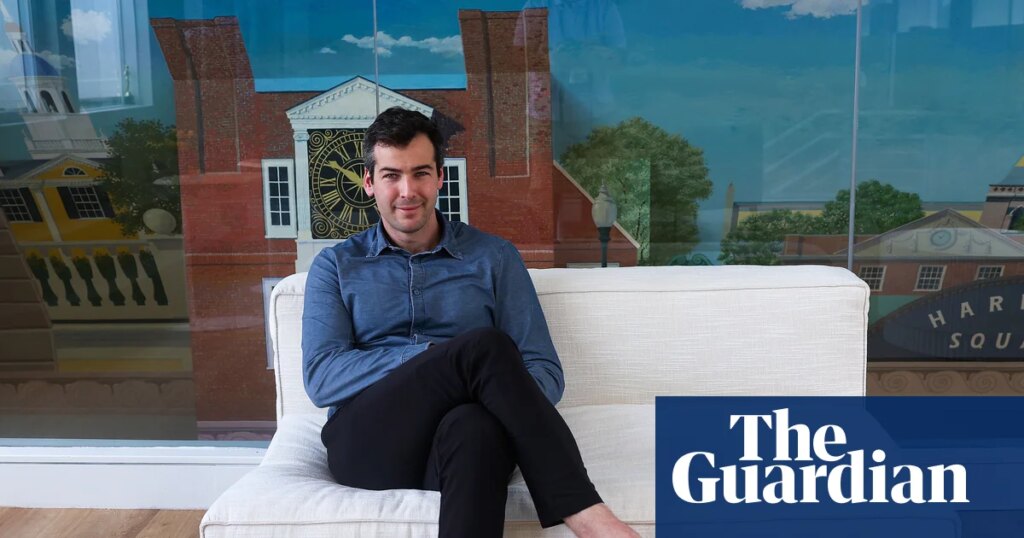
‘The format of the future,” asserts Mikey Shulman, “is music you play with, not just play.” As the CEO and co-founder of Suno, a generative AI music company, Shulman occupies a fascinatingly precarious position. He is seen as both the visionary architect of music’s future and its potential executioner.
Founded just over two years ago, Suno enables users to produce entire songs using simple text prompts. While users currently cannot specify songs by particular pop stars, requests for music that evokes a “stadium-level confessional pop-country” or that “references past relationships” might yield a song reminiscent of Taylor Swift.
In June 2024, Suno found itself embroiled in legal turmoil, becoming the target of a lawsuit filed by the RIAA, representing major labels in the US. The following January, a similar suit was lodged by GEMA, a German rights organization for songwriters. Both entities accused Suno of training its AI systems on copyrighted materials without obtaining the necessary licenses or authorizations.
The rise of generative AI music services has ushered in an existential crisis within the music industry. On one hand, the technology promises to democratize creative expression; on the other, it poses a threat that human musicians may become obsolete, particularly at a time when many artists struggle to earn sufficient income from streaming revenues. Dave Stewart of Eurythmics described it as an “unstoppable force,” suggesting that musicians should embrace it, whether they like it or not. Meanwhile, Catherine Anne Davies, known as the Anchoress, referred to the situation as “dystopian.” Music attorney Gregor Pryor has echoed concerns that AI-generated music is already impacting traditional background music roles.
“We aspire to establish the next format for recorded music,” remarks Shulman. “The music of the future will be interactive, social, and collaborative.” By this, he means that users should be able to create music together with others. Suno aims to craft the most engaging digital version of this collaborative experience.
Investors clearly remain optimistic about the venture. In November, Suno successfully raised $250 million (£187 million), elevating its valuation to $2.45 billion (£1.83 billion). The generative AI sector in Silicon Valley has witnessed unprecedented investment, with reports from Stanford University indicating it attracted $34 billion (£25 billion) in 2024. However, some analysts, particularly at the Bank of England, caution that this boom may lead to a subsequent downturn. For the moment, investors seem to believe that generative AI represents an opportunity too substantial to overlook. Amidst the backdrop of a recent investor presentation leak, revealing that Suno had just 1 million paying subscribers at a basic monthly fee of £8.25 ($10), the stakes for the company’s success are incredibly high.
“What investors needed to grasp,” explains Shulman, “is the significance of music in the world. Once they understand its value, their perspective shifts dramatically, revealing far greater potential than they initially imagined.”
Typically, when new technologies disrupt the music industry, the initial reaction is one of outrage leading to litigation, followed by negotiation, and ultimately licensing agreements. The three dominant players in the generative AI music sector each find themselves at different points along this path. Klay has secured partnerships with all three major labels even before their technology was launched, making it an exception to the prevailing “launch first, license later” trend. Udio has managed to strike agreements with Universal Music Group (UMG) and Warner Music Group (WMG), while Suno currently holds a single deal with WMG, with ongoing legal challenges from the other major labels.
At 39, Shulman has firsthand experience of the struggles faced by musicians, having previously found himself in various bands during high school and college. “I was decent but not remarkable, and a sustainable career in music eluded me,” he recalls during a video chat from his US residence, with a bass guitar visible in the background. His manner of speaking conveys a sense of thoughtfulness and caution, devoid of the arrogance often associated with successful start-up founders.
A pivot toward a PhD in physics led him to collaborate with Suno’s co-founders, who sought to create something distinct from prominent AI firms like OpenAI. They recognized that music doesn’t conform to binary outcomes; unlike many problems that technology aims to solve, music thrives on intricacy and creativity.
Questions linger regarding how exactly Suno gathers the music it utilizes to train its AI models. Shulman made a statement in a 2024 blog post indicating that they train their models using medium- and high-quality music sourced from the open internet. Their preliminary legal argument centered on fair use, asserting that the music utilized did not necessitate prior permission. However, the recording industry holds a different perspective, arguing that “fair use” cannot apply when the output aims to replicate the original work.
When asked about the concept of “open internet,” Shulman draws attention to the nuances between copyrighted materials (which typically enjoy protection for 70 years) and content that exists in the public domain. “Copyright is a complex issue,” he remarks. “Sharing too many specifics isn’t feasible right now because of ongoing legal matters.”
A concern arises over whether Suno’s philosophy of making music more accessible could inadvertently undermine the essence of art itself. Shulman counters that just as digital recording and sampling transformed music previously, technology can also facilitate the emergence of new artists and genres.
The quality of AI-generated music is subjective, he argues. “I made a humorous song with my four-year-old yesterday. You might label it as ‘slop,’ but to me, it’s fabulous.” He emphasizes that music produced through Suno can genuinely meet high standards.
AI-generated content has flooded streaming platforms: Deezer reported that over a third of the new music it receives daily is AI-generated—approximately 50,000 tracks. Notably, up to 70% of streams for AI-generated music may be fraudulent, with scammers manipulating streaming counts to extract royalties—a reality that services are becoming increasingly adept at counteracting. Deezer has introduced an AI tagging system to help users identify AI tracks. Additionally, Bandcamp has recently declared its intention not to host music that is “wholly or partially generated by AI.”
What path should others follow? Shulman remarks that he doesn’t aim to dictate what occurs on other platforms, acknowledging the complexity of navigating this evolving landscape. Velvet Sundown, an entirely AI-generated “band,” released its debut album and a follow-up last summer, achieving millions of streams but was ultimately a fleeting trend. “I’m not entirely sure about their strategy,” Shulman notes, “but it seemed like a lighthearted venture. That’s probably why it didn’t last long.”
Nevertheless, some AI-generated tracks show staying power. Following accusations that it mimicked Jorja Smith’s voice, a track titled “I Run,” produced by Haven, was barred from the UK charts, whereas a re-recorded version featuring human vocalist Kaitlin Aragon reached the Top 10. Another track, “Into the Blue,” by Sienna Rose, has recently made waves, suspected to be AI-generated while achieving a spot in Spotify’s Viral 50 Global chart. Meanwhile, “Jag Vet, Du Är Inte Min,” a major hit in Sweden, faced exclusion from the country’s charts on the grounds of being predominantly AI-generated.
More troubling was the instance in the previous year where Suno was used to generate tracks that the Anti-Defamation League reported glorified Adolf Hitler, utilized racist language, and promoted “white power” themes. Shulman asserts, “These were only three songs with a total of 10 plays. It was a minor issue that unfortunately gained undue attention.” He also claims that Suno has implemented stricter safeguards to prevent similar occurrences moving forward.
Suno views its agreement with WMG as a demonstration that generative AI companies can form collaborative partnerships. Did the recent $1.5 billion (£1.1 billion) settlement from AI firm Anthropic with the publishing industry influence Suno’s push to secure deals promptly? “I wouldn’t say that impacted us much,” Shulman replies. “There’s significantly more to gain through collaboration than conflict, and we aim to emphasize that through our partnership with Warner.”
Nonetheless, uncertainties remain regarding the details of the WMG collaboration. Were modifications mandated by the label? Were past royalties addressed? Did WMG gain equity in Suno? Shulman remains tight-lipped, suggesting that it is “premature” to discuss these matters due to ongoing negotiations.
While securing major label agreements is one challenge, attracting artists presents another. Labels maintain that music will only be licensed if artists opt into agreements. However, given the possibility that only a small number may do so, artists may find their names, images, and likenesses adversely affected if they remain unrepresented.
Malcolm Gladwell’s “10,000-hour rule” suggests that this is the time artists typically require to achieve mastery. Will platforms like Suno alter this paradigm? “I believe individuals will still need to invest those 10,000 hours,” asserts Shulman. “Although the nature of the skills they practice may change, dedication remains crucial in creating exceptional music.”
In a bid to enhance its industry image, Suno enlisted US producer Timbaland as a strategic advisor. However, he had to issue a public apology after allegedly utilizing a track from producer K Fresh without authorization. Fresh claimed that Timbaland “uploaded it into Suno’s AI platform and released an unauthorized AI remix.”
Despite controversies, Shulman contends that many musicians view Suno as a significant innovative tool and songwriting assistant. He previously mentioned on the 20VC podcast that “the majority of musicians don’t fully enjoy the process of creating music.” This doesn’t imply that musicians dislike creativity altogether, but many appreciate tools that alleviate some of the mundane tasks involved.
Shulman suggests that many artists regard this reliance as a “dirty secret.” “One-on-one conversations reveal a more candid understanding. We’re often regarded as the Ozempic of the music industry—everyone’s using it, but nobody wants to openly discuss it.”
The overarching concern, however, is whether by “medicating” music creation with AI, the essence of artistry might diminish.

Jessica
https://www.linkedin.com/company/aucteraAffiliate Content Writer