Clash of the Chatbots: Anthropic and OpenAI Compete for Ad Space in Their AI Offerings
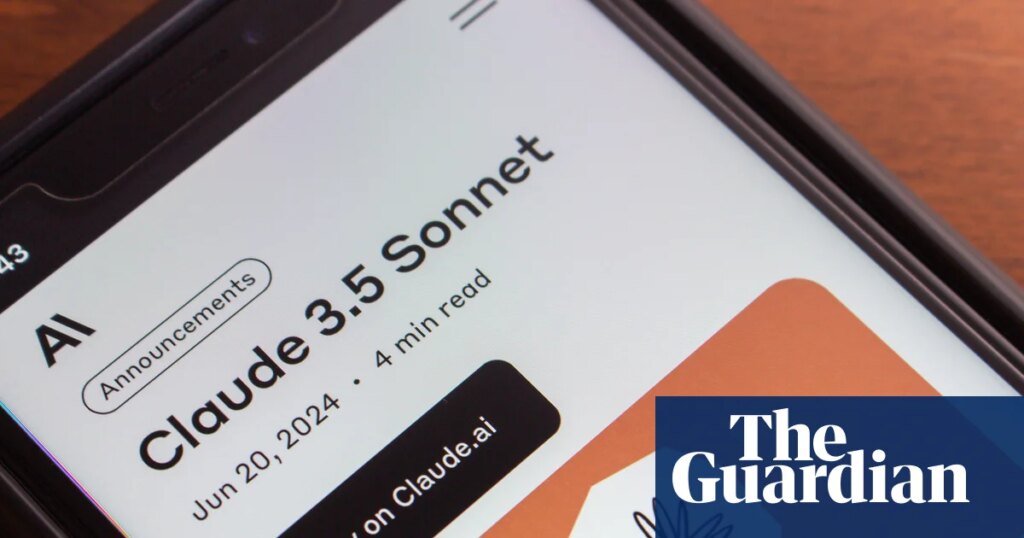
As the stage is set for a highly-anticipated showdown between the Seahawks and the Patriots, an unexpected rivalry is also heating up behind the scenes.
AI competitors Anthropic and OpenAI have embarked on an aggressive advertising battle, vying for the attention of corporate America during one of the most prominent entertainment events of the year.
In the lead-up to the Super Bowl, Anthropic has rolled out a series of pointed ads aimed directly at its competitor.
These ads feature a familiar scenario: a 23-year-old, slightly scrawny man wishing to achieve a more muscular physique is approached by a chatbot embodied by a ripped older man who suggests specialized insoles that purportedly help “short kings stand tall,” emphasizing that confidence isn’t solely about gym workouts. Meanwhile, another ad features a different subject, where a man looking to enhance his communication with his mother receives a rather unusual recommendation from his therapist: joining a niche dating site that supposedly connects sensitive “cubs” with assertive “cougars,” perhaps as a lighthearted joke about solving relational issues through unconventional means.
Every ad concludes with the same punchy tagline: “Ads are coming to AI. But not to Claude.” Although ChatGPT is not explicitly mentioned, the implications resonate strongly.
Even Sam Altman, the CEO of OpenAI, had his share of amusement regarding the ads, but he didn’t hold back when he termed them “so clearly dishonest” and opted for a detailed critique on X.
Altman stated that “Our most important principle for ads says that we won’t do exactly this; we would obviously never run ads in the way Anthropic depicts them.” He clarified their stance by expressing, “We are not stupid and we know our users would reject that.”
He emphasized that OpenAI’s recent decision to incorporate ads, which was announced last month, aims to make their product more accessible. In his words, “We believe everyone deserves to use AI and are committed to free access.” Moreover, Altman took the opportunity to direct some barbs back at Anthropic, stating, “Anthropic serves an expensive product to rich people. We are glad they do that and we are doing that too, but we also believe it’s essential to bring AI to billions who cannot pay for subscriptions.” (It’s worth noting that Claude also boasts a free subscription version.)
Although the ad policy for ChatGPT has yet to be fully implemented, OpenAI assures on its website that ads will be “separate and clearly labeled”, with no influence on user responses. The company has pledged that it will not share conversations from ChatGPT with advertisers, and they are focused on prioritizing user trust. Additionally, users will have options for turning off personalized ads or choosing a paid ad-free plan. Ads are set to appear at the bottom of responses “when there’s a relevant sponsored product or service based on your current conversation.”
Interestingly, Altman was not always in favor of inserting ads into ChatGPT’s framework. Back in October 2024, he had dismissed the concept as a “last resort.” However, as OpenAI has escalated its investment in AI infrastructure, its growth in new subscribers has started to plateau.
It’s essential to understand that Anthropic’s critique of OpenAI isn’t unfounded. The company was established by former OpenAI researchers who departed out of concerns regarding the company’s direction pertaining to AI safety. Anthropic’s blog post dated 4 February highlighted that Claude would remain ad-free, arguing that introducing ads would hinder its ability to serve as a “genuinely helpful assistant for work and deep thinking.” The company emphasized that conversations with AI assistants can be deeply personal or complex, warning that the appearance of ads could feel incongruous, or even inappropriate.
While OpenAI asserts it won’t directly share user data with advertisers, targeted advertising has faced criticism for capitalizing on users’ vulnerabilities. This sentiment could stretch to users discussing their mental and physical health when interacting with ChatGPT, a concept illustrated in Anthropic’s playful advertisements. Conversely, there is a potential that targeted advertising might help mitigate AI’s most detrimental elements. Corporations investing in AI may withdraw their funding in response to hateful or objectionable content. Most modern platforms, from Google to Instagram, have incorporated ads seamlessly; thus, it may not disrupt users’ experiences significantly.
Ultimately, it remains uncertain whether Altman’s strategy to generate revenue through ads will drive users toward ad-free platforms. Nonetheless, Anthropic appears to be banking on this outcome.
Interested in growing your brand with smarter solutions? Get in touch with Auctera today.

Jessica
https://www.linkedin.com/company/aucteraAffiliate Content Writer