NHS and MoD Encouraged to Support British Technology for Growth During Iran Crisis
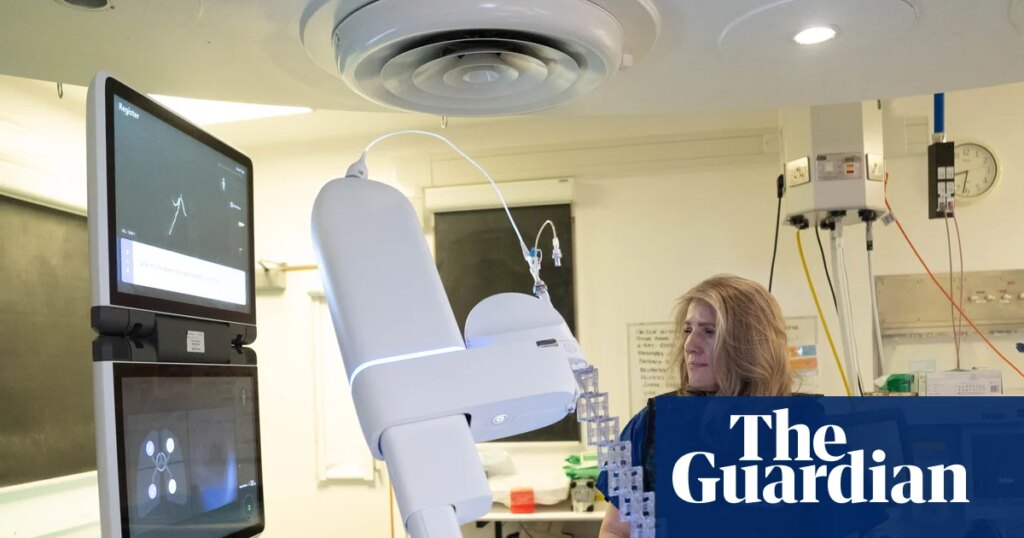
In a bid to bolster the United Kingdom’s economy amidst the ongoing turmoil in the Middle East, particularly relating to the Iran crisis, the government is advocating for the NHS and the Ministry of Defence to prioritize British technology when making purchases. Treasury minister Spencer Livermore has emphasized the potential of artificial intelligence (AI) to drive economic growth during these challenging times.
Chancellor Rachel Reeves is scheduled to present her economic strategy in a prominent lecture on Tuesday, as surging oil prices raise concerns about inflation rates and the likelihood of slowing economic growth.
Livermore, who collaborates closely with Reeves on economic policies, indicated that the chancellor will outline three main strategic priorities: strengthening ties with the European Union (EU), enhancing regional policy initiatives particularly in the Oxford-Cambridge corridor, and promoting aggressive investment in AI technologies.
On the matter of AI, Livermore noted that Reeves is eager to present an optimistic perspective. This comes despite rising apprehensions regarding the impact of AI on job markets, especially for younger workers. He highlighted, “There are massive opportunities here, and I think that’s what we want to try to talk about. Clearly we want to be one of the fastest adopters in the world.”
He further stated: “It’s crucial that we convey the vast potential for economic growth that AI can bring. More growth leads to more job opportunities.”
Recent criticisms have been leveled against Labour regarding its close affiliations with American tech giants, including the controversial Palantir, which maintains a contract with the NHS. Additionally, a recent analysis by The Guardian indicated that high-profile AI partnerships touted by the government over the past two years have yet to result in measurable investments.
Livermore is advocating for the government to utilize its budget to support local tech companies, which often struggle against bureaucratic hurdles and institutional risk aversion. “The UK government has been slow to adopt new technologies,” he declared.
He proposed establishing a rapid innovation procurement taskforce that would operate outside traditional procurement frameworks. This initiative would initially focus on the defense and health sectors, facilitating quicker technology purchases by the state. “It’s an exciting development,” he added.
Livermore noted: “Considering the rapid advancements in AI and technology, we rarely find ourselves as the first customer for these innovations. That narrative must change.”
He also suggested that Labour is becoming increasingly open to advocating for closer trade relationships with the EU, albeit without violating its established positions, which include no free movement of people.
He remarked, “The repercussions of Brexit are proving to be more severe than anticipated, and this government must be candid about that, engaging in a ‘fact-based dialogue’ on the matter.”
When questioned about the economic ramifications and potential public finance issues that could arise from a prolonged conflict in the Middle East, Livermore—who served as an advisor to Gordon Brown during the New Labour era—asserted, “The underlying strengths of our economy were solid before this period of uncertainty began.”
As the latest official statistics reveal that the GDP experienced zero growth in January, Livermore underscored Reeves’s efforts to stabilize public finances alongside measures aimed at alleviating the burden of living costs outlined in the budget.
He stated, “The spring forecast, delivered on 3 March, was well-timed, providing a backdrop to the strong fundamentals we had before the crisis. Inflation was kept lower than otherwise due to our prior actions, gilt yields were on a decline, and we had even expanded our financial leeway in the spring forecast.”
“I am aware that decisions made by Rachel faced fierce scrutiny during the previous two budgets, but they were indeed the correct moves,” Livermore maintained.
As part of the “Iran Board” established within the Treasury, Livermore mentioned that ministers and officials are devising strategies to ensure the UK is prepared for various potential scenarios that may arise in light of the current geopolitical instability.
Nevertheless, he asserted that the ongoing crisis only underscores the need for Reeves’s “securonomics” approach—a proactive and strategic state that identifies which sectors and regions to support with public investment.
Finally, he remarked, “The implications for the British economy will hinge on the severity and duration of this crisis, and at present, the outcome remains uncertain. However, we are taking appropriate actions in the Treasury to brace for impending challenges.”
Interested in growing your brand with smarter solutions? Get in touch with Auctera today.

Jessica
https://www.linkedin.com/company/aucteraAffiliate Content Writer