Thousands of writers release ‘blank’ books in protest against AI exploitation of their work.
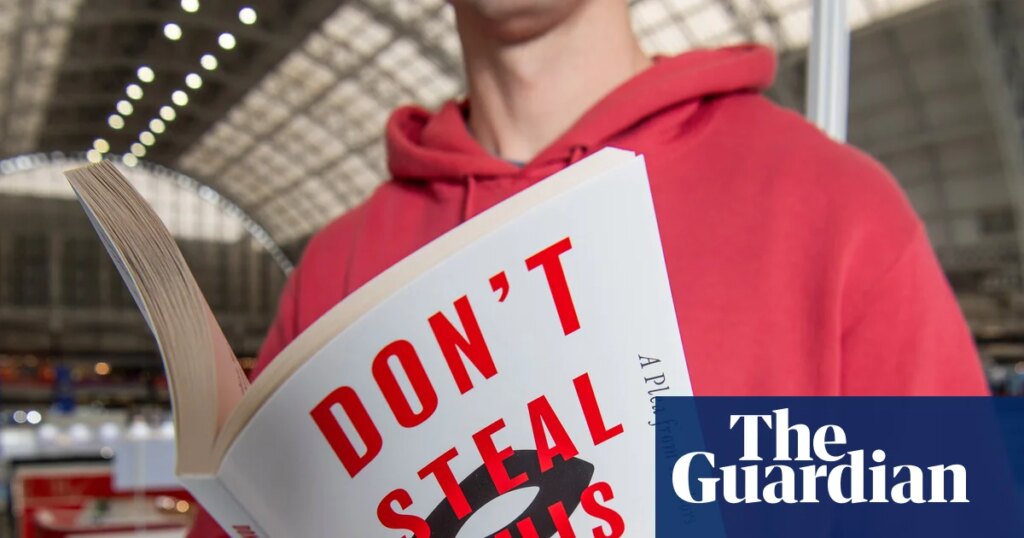
In a bold statement against the misuse of their intellectual property, thousands of authors, including renowned figures such as Kazuo Ishiguro, Philippa Gregory, and Richard Osman, have come together to publish a unique “empty” book. This book, titled Don’t Steal This Book, features no content other than a compilation of their names, serving as a protest against AI companies that utilize their work without obtaining permission.
Approximately 10,000 writers have contributed to this remarkable initiative, which will see copies distributed to attendees at the London Book Fair on Tuesday. This event precedes a crucial upcoming assessment from the UK government, due to be released next week, which will analyze the potential economic ramifications of proposed revisions to copyright law.
By March 18, government officials are expected to provide an economic impact assessment, along with a progress report regarding the ongoing consultation aimed at overhauling copyright laws. This initiative emerges against a backdrop of growing discontent among creative professionals who are increasingly frustrated by the unauthorized usage of their work by AI firms.
The book’s organizer, Ed Newton-Rex—who is not only a composer but also an advocate for protecting artists’ copyright—expressed his perspectives on the issue, stating that the AI industry is fundamentally built on “stolen work,” obtained without the rightful owners’ consent or compensation. As he put it, “This is not a victimless crime; generative AI competes directly with the creators whose work it uses for training, effectively robbing them of their livelihoods. The government must take a stance to protect the UK’s artists and refuse to legitimize the theft of creative content by AI corporations.”
Prominent authors who have added their names to this protest include Mick Herron, known for his Slow Horses series; bestselling author Marian Keyes; celebrated historian David Olusoga; and Malorie Blackman, the acclaimed writer of Noughts and Crosses.
Blackman emphasized, “It is entirely reasonable to expect AI companies to compensate authors for the use of their literary works.”
The back cover of the book makes a clear statement: “The UK government must not legalize book theft to benefit AI companies.”
Alongside this publication, publishers are also poised to launch an AI licensing initiative during the London Book Fair. Publishers’ Licensing Services, a non-profit organization representing the industry, is setting up a collective licensing scheme and encouraging the sector to adopt it, aiming to grant legal access to it to published materials.
The AI field relies heavily on extensive datasets, which often include copyrighted material sourced from the open web, to create technologies like chatbots and image generators. This dependency has sparked significant concern among creative professionals and organizations globally, resulting in legal battles on both sides of the Atlantic.
In the previous year, Anthropic, a leading AI company responsible for the Claude chatbot, agreed to a settlement payment of $1.5 billion (£1.1 billion) concerning a class-action lawsuit initiated by book authors who accused the startup of using pirated versions of their works in training its leading product.
British artists have expressed their outrage towards a key government proposal under consideration. This proposal suggests allowing AI firms to utilize copyright-protected material without needing permission from the copyright holder unless they have opted out explicitly. Prominent artists, including Elton John, have voiced their discontent regarding the potential relaxation of copyright laws, labeling the government as “absolute losers” in the matter.
In addition to the primary proposal, ministers have also put forward three alternative options: maintaining the current legal state, requiring AI companies to obtain licenses for copyright use, or allowing AI firms to utilize copyrighted work without offering an opt-out for creative individuals and companies.
The government has not excluded the possibility of a copyright waiver for commercial research purposes, a provision that creative professionals fear may be exploited by AI firms to appropriate artists’ works without consent.
A government spokesperson remarked: “The government aims to establish a copyright framework that values and safeguards human creativity while fostering trust and unlocking innovation. We remain committed to engaging closely with the creative sector on these pressing issues and will honor our commitment to update parliament by March 18th.”
Interested in growing your brand with smarter solutions? Get in touch with Auctera today.

Jessica
https://www.linkedin.com/company/aucteraAffiliate Content Writer