Unaccounted funds, delivered chips, and a staggering 350,000% return: essential insights on AI ‘ghost investments’
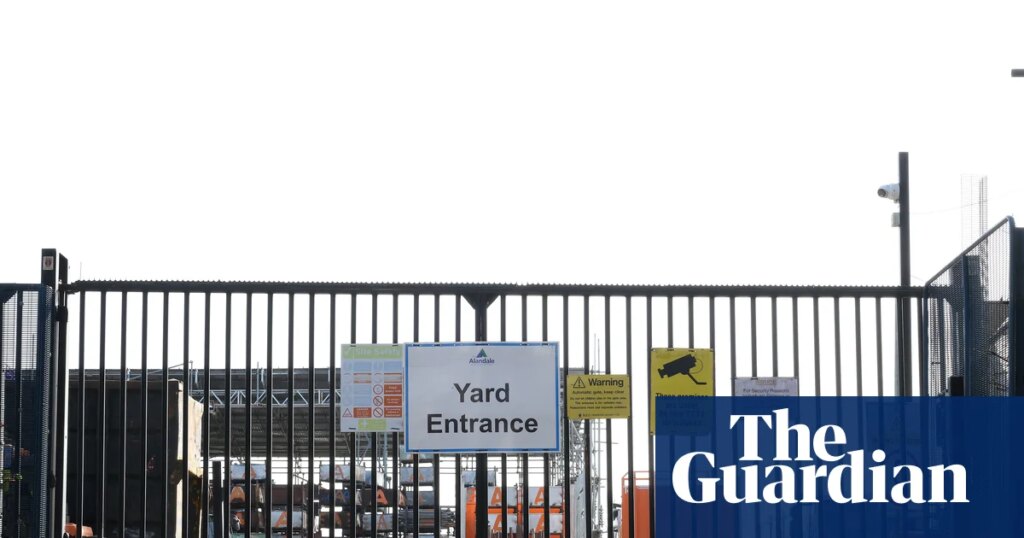
1. A supercomputer centre set to be built this year is still a scaffolding yard in Loughton
Recently, The Guardian reported from a location in Essex designated for a “next-generation AI computing centre,” constructed by Nscale. According to both the government and Nscale, this ambitious supercomputer is expected to be operational by year-end.
However, the site remains an active scaffolding yard operated by another company. While Nscale claimed over a year ago that it had secured the site, land registry records indicate that the company is not registered as the property owner. As a result, the likelihood of Nscale completing this “top-tier” supercomputer on schedule seems doubtful.
2. The UK government has not checked the numbers when it comes to massive AI investments
In an inquiry regarding substantial investments amounting to billions from companies like Nscale and CoreWeave, The Guardian found that the UK government has not verified these figures. The government clarified that the data were self-reported by the corporations, lacking an auditing mechanism to confirm the legitimacy of the claims. Consequently, specifics regarding whether these investments pertain to equipment, cash, or other assets remain unknown.
When queried about a claimed contract related to the supercomputer project in Loughton, the government failed to provide a clear answer. Instead, they pointed out that the stated investment of $2.5 billion did not entail a formal agreement, but rather an expression of intent to secure funding.
3. Some ‘investments’ are not money, but computer chips relocated to the UK
Both Nscale and CoreWeave have indicated that a significant portion of their so-called massive investments will consist of Nvidia chips. These chips are intended for deployment in UK datacentres and will be rented out to users, including tech giants from the United States.
Essentially, Nscale’s announced $2.5 billion investment may predominantly involve purchasing a large volume of Nvidia chips, manufactured in Taiwan, and placing them within a UK datacentre to then rent those chips to firms like Microsoft.
This raises concerns about whether the full $2.5 billion will actually benefit the UK economy directly.
Moreover, in 2024, CoreWeave and the UK government touted a £1 billion investment aimed at establishing two new datacentres in the UK. While CoreWeave suggested this would result in job creation, the promised datacentres have yet to materialize. Instead, the company has opted to enhance existing UK datacentres with Nvidia chips, claiming that the chips and related logistical costs account for the bulk of their investment. This, they argue, is a standard industry practice.
4. A Lanarkshire AI hub will require a nuclear reactor’s worth of power
In January, the government disclosed plans for CoreWeave to collaborate with the Scottish company DataVita to establish an “AI growth zone.” This ambitious initiative is anticipated to require between 500MW and 1GW of private renewable energy. CoreWeave has announced a £1.5 billion investment in this venture, yet the government hasn’t verified this figure.
To put this into perspective, 1GW of renewable energy corresponds to the output of a nuclear reactor or Scotland’s largest offshore wind farm, which spans approximately 1,100 square miles. DataVita plans to provide this energy through a private wire setup, circumventing the public grid.
However, there appear to be no official plans for constructing either a nuclear reactor or a large wind farm in Lanarkshire at this time.
5. Key companies have spotty records, but might make a fortune anyway
Despite facing scrutiny, CoreWeave became one of the largest technology IPOs last year, with its share price increasing nearly fourfold in the months following its public debut amid a surge of enthusiasm surrounding AI developments. However, the company is now facing a lawsuit from shareholders who allege that it obscured crucial information regarding slow datacentre progress, which led to a decline in stock value once this information became public.
CoreWeave acknowledged the lawsuit and stated that the claims are baseless, asserting that it will defend itself vigorously. Regardless of the veracity of these allegations, some of CoreWeave’s early investors are likely to have profited significantly in the time leading up to the lawsuit.
Similarly, Nscale allocated shares at a valuation of just 1p in October. Following a successful $2 billion funding round that valued the company at $14.6 billion, these shares have skyrocketed in worth. Analysts have estimated a staggering 350,000% return on investment. This leads to the potential for shareholders to gain substantial wealth should Nscale proceed with a public offering, highly dependent on the prevailing enthusiasm surrounding AI at that time.
Interested in growing your brand with smarter solutions? Get in touch with Auctera today.

Jessica
https://www.linkedin.com/company/aucteraAffiliate Content Writer