Cancel ChatGPT: Immediately! Your subscription supports authoritarianism | Rutger Bregman
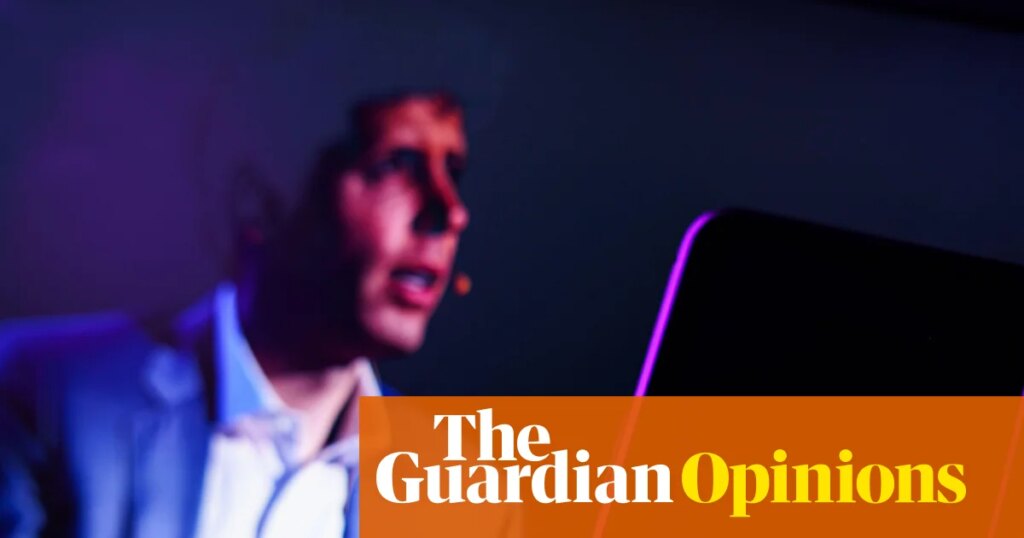
OpenAI, the organization responsible for ChatGPT, is projected to incur a staggering $14 billion in losses this year. Its market share is diminishing rapidly, and CEO Sam Altman has openly acknowledged that they have “screwed up” a critical aspect of the product. The speed of this decline can be accelerated in just 10 seconds of your attention.
A grassroots movement known as QuitGPT has gained traction across the United States and beyond, urging individuals to terminate their ChatGPT subscriptions. To date, over a million people have heeded this call. High-profile figures like Mark Ruffalo and Katy Perry have expressed their support. This represents one of the most notable consumer boycotts in recent history, and it’s time for Europeans to step in.
The origins of this boycott stem from a disturbing revelation earlier this year: OpenAI’s president, Greg Brockman, made a $25 million donation to MAGA Inc, the largest pro-Trump Super PAC. This made him Trump’s most significant donor in the last cycle. When questioned by Wired about it, Brockman claimed his donations served OpenAI’s mission to benefit “humanity.”
However, the practical manifestation of this mission raises some serious concerns. Agents of ICE – the agency accused of being responsible for the deaths of two individuals in Minneapolis this past January – have utilized ChatGPT-powered screening tools to evaluate potential recruits. The company behind your seemingly friendly chatbot is involved in government decisions regarding hiring personnel for deportation raids.
The situation has escalated further. OpenAI aided in launching a $125 million lobbying effort through a Super PAC aimed at obstructing state regulations on AI technology. The organization actively attacks any political figure attempting to implement safety regulations. Their ultimate goal seems to be allowing Trump alone to dictate the framework for this powerful technology. Each month, subscription fees from users worldwide feed a company that is embedding itself within the enforcement structures of the Trump administration. This is not just a conspiracy—it’s a strategic business approach.
Things deteriorated even further last week when the Trump administration insisted that AI firms permit the Pentagon unrestricted access to their technology for purposes including mass surveillance and autonomous weaponry. In contrast, Anthropic, the creator of ChatGPT’s primary competitor, Claude, refused this request.
The backlash was swift and severe. Trump instructed every federal agency to halt the use of Anthropic’s technology. The Secretary of War, Pete Hegseth, classified the company as a “supply-chain risk to national security,” a label typically reserved for entities like Huawei. He made it clear that any company partnering with the US military would be barred from forming relationships with Anthropic. This effectively amounts to a corporate death sentence for the latter for the “crime” of refusing to contribute to the development of lethal technology.
So, what was OpenAI’s response? That very Friday night, while Anthropic was taking a principled stand, Sam Altman quietly finalized a deal with the Pentagon to replace Anthropic.
Let me clarify: I am not against AI. I utilize AI tools daily in my work. This isn’t about outright rejection of technology; it’s about refusing to fund a corporation that is backing authoritarian practices.
As a historian, this moment intrigues me greatly. The most effective consumer boycotts in history have two distinct characteristics: they are specific and they are easy to execute. QuitGPT aligns perfectly with both of these principles.
Let’s examine why precise targeting is crucial. Back in 1955, African American residents of Montgomery, Alabama didn’t aim to dismantle the whole segregation system at once. They zeroed in on a specific target—the city’s bus system—and for 381 days, they walked or drove to work instead. This effort financially crippled the bus company and significantly undermined the apparatus of segregation in the Southern US.
In this contemporary context, OpenAI is akin to our bus company. It represents an ideal target because it is particularly vulnerable. The company is experiencing rapid financial depletion, one of the swiftest rates observed in corporate history. Its market share has dropped dramatically, falling from 69% to 45% in just a year. In desperation for revenue, they’ve started running advertisements—something Altman previously called a last resort. Investors are scrutinizing subscriber counts closely; each cancellation holds weight.
Moreover, QuitGPT distinguishes itself from previous boycott attempts like #DeleteFacebook or modal appeals to boycott Amazon—efforts that faltered because the call to action was too formidable. Quitting Facebook often means losing a network of family and friends, while exiting Amazon feels similar to losing a necessary resource. The friction these campaigns faced diluted their principles.
In stark contrast, terminating a ChatGPT subscription is incredibly simple; it can be done in about 10 seconds, and the available alternatives are just as competent or even superior. History indicates why the #QuitGPT movement has significant potential: impactful campaigns like the 1977 Nestlé boycott and the 2023 Bud Light boycott succeeded because they were both well-defined and easy to undertake. They had a precise target, and individuals had ample alternatives.
Historical boycotts achieved success not because numerous individuals suddenly morphed into brave activists, but because choosing a different product was something anyone could carry out on any given Tuesday afternoon. When small acts accumulate, they create a political shift.
Visit quitgpt.org. Cancel your subscription. If you are using the free version, consider deleting the app entirely, as your interactions still contribute to the company’s data pool. Explore an alternative and share your experiences with at least one person.
OpenAI’s president wagered $25 million that you would either remain unaware of where your subscription funds are going or, even if you did, that you would not care enough to take that brief moment to switch to a different service. Now is the moment to demonstrate him wrong.
Interested in growing your brand with smarter solutions? Get in touch with Auctera today.

Jessica
https://www.linkedin.com/company/aucteraAffiliate Content Writer