Iran Conflict Signals Dawn of AI-Driven Bombing Faster Than ‘Thought Speed’
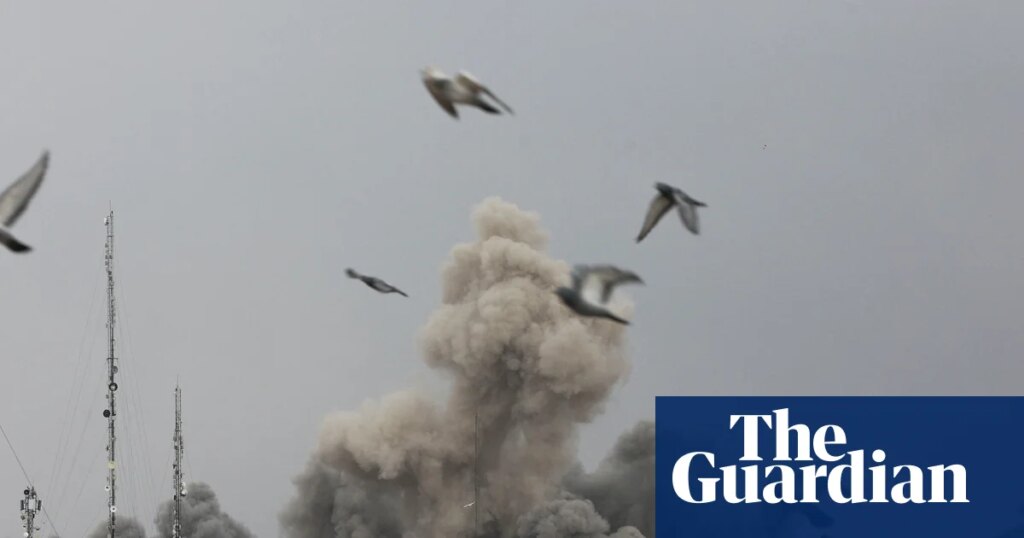
The integration of AI tools into military operations has significantly transformed strategic approaches, particularly in relation to Iran. Experts indicate that this evolution may usher in a new age of warfare, enabling attacks at unprecedented speeds that surpass conventional human decision-making processes.
Reports suggest that Anthropic’s AI model, Claude, was utilized by the US military during extensive strikes, with the technology enabling a rapid “kill chain” transformation. This term refers to the streamlined process of identifying targets, obtaining legal approvals, and launching strikes, all executed more swiftly than ever before.
In a staggering display of military might, the United States and Israel, both of whom had previously harnessed AI to identify targets in Gaza, instigated nearly 900 strikes against Iranian installations in a mere 12 hours. Among the casualties was Ayatollah Ali Khamenei, Iran’s supreme leader, showcasing the lethal efficiency of this new technology.
Academics investigating these technological advancements in military strategy point out that AI is effectively collapsing the time typically required for the planning of complex operations—a phenomenon termed “decision compression.” This unsettling trend raises alarms that human military and legal experts may become secondary players, relegated to merely approving the automated strike plans without thorough scrutiny.
In 2024, Anthropic’s outreach expanded across the US Department of War and other national security outfits to expedite war planning initiatives. Claude was integrated into a system created by Palantir, a war-tech firm collaborating with the Pentagon. This system aims to “dramatically enhance intelligence analysis” and assists officials in making critical decisions more effectively.
According to Craig Jones, a senior lecturer in political geography at Newcastle University and an expert on military kill chains, “The AI machine is making recommendations for what to target, which is actually much quicker in some ways than the speed of thought.” This new paradigm permits simultaneous execution of assassination-style strikes while neutralizing a regime’s capacity for aerial retaliation. Jones noted that what would have taken days, or even weeks, in historical contexts can now be executed almost instantaneously.
The current generation of AI systems possesses the capability to swiftly evaluate vast amounts of data related to potential targets, which include drone surveillance, telecommunications interferences, and human intelligence. Palantir’s implementation leverages machine learning to effectively identify and prioritize targets, as well as recommend appropriate weaponry. The system factors in existing armaments and past effectiveness against similar targets, utilizing automated reasoning to assess the legal justifications for any impending actions.
David Leslie, a professor specializing in ethics, technology, and society at Queen Mary University of London, views this trend as a defining moment in military strategy and technological evolution. He also cautions that an overreliance on AI may lead to what he terms “cognitive off-loading.” Human decision-makers could become increasingly detached from the consequences of their decisions when these choices are predominantly shaped by automated systems.
A recent missile strike in southern Iran resulted in the death of 165 individuals, a significant portion of whom were children, as reported by state media. This strike, which targeted an area adjacent to a military barracks, drew sharp criticism from the UN, which labeled it a “grave violation of humanitarian law.” The US military has stated that they are currently investigating this incident.
While it remains unclear what AI systems, if any, Iran has deployed within its military strategy, the nation claimed in 2025 to have integrated AI into its missile targeting algorithms. However, international sanctions appear to have stunted the growth of Iran’s AI capabilities, rendering them significantly weaker compared to the AI leaders such as the U.S. and China.
In the lead-up to the Iran strikes, the US administration announced plans to eliminate Anthropic from its systems, following the company’s refusal to allow its AI applications to be used for fully autonomous weaponry or civilian surveillance. Despite these intentions, Anthropic’s technology remains operational until a formal phase-out is implemented. Meanwhile, Anthropic’s competitor, OpenAI, quickly secured its own military agreement with the Pentagon for the use of its AI models.
Leslie highlighted that “the advantage lies in the rapidity of decision-making, condensing what could have taken days or weeks into mere minutes or seconds.” While these systems provide a series of options for human decision-makers, they also create a more constrained timeframe for evaluating the recommendations.
Prerana Joshi, a research fellow at the Royal United Services Institute, a defense thinktank, added that the implementation of AI across military sectors is rapidly expanding. “It is being adopted across various national defense landscapes, enhancing logistics, training, decision management, and maintenance,” Joshi explained.
She further elaborated: “AI serves as a transformative technology, enabling decision-makers and individuals within the military chain to enhance productivity and efficiency. It streamlines the synthesis of data at accelerated rates, equipping decision-makers with timely and relevant information.”
Interested in growing your brand with smarter solutions? Get in touch with Auctera today.

Jessica
https://www.linkedin.com/company/aucteraAffiliate Content Writer