Nvidia’s Quarterly Earnings Highlight Resilience Against AI Bubble Concerns Amid Data Center Surge
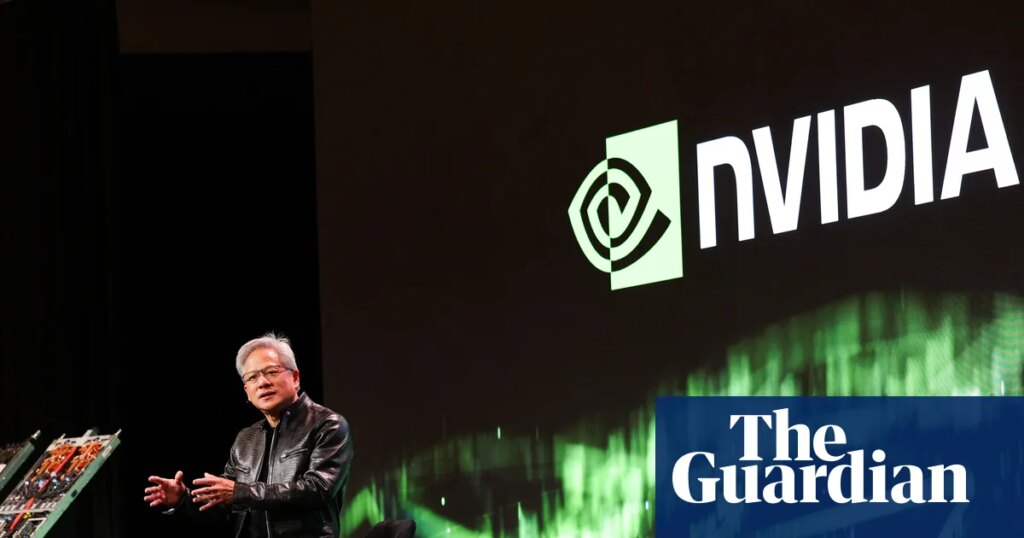
Nvidia unveiled its latest quarterly earnings on Wednesday, showcasing revenues that exceeded analysts’ expectations and continuing a remarkable trend of outpacing Wall Street’s high forecasts. This achievement underscores Nvidia’s position as a leader in the tech industry, where it has consistently generated impressive financial results.
Nvidia generates most of its income from its data center business, an area that has seen tremendous growth, thanks largely to significant investments by the tech sector in artificial intelligence (AI) infrastructure. The company reported a staggering 75% year-over-year growth in this segment, bringing total annual revenue to $62.3 billion. As the world’s highest-valued public company, Nvidia has become a cornerstone of the chip market, with its processing units serving as critical components in the ongoing AI revolution. For the fiscal year, the company also boasted an impressive overall profit of $120 billion.
“Our customers are racing to invest in AI compute – the factories powering the AI industrial revolution and their future growth,” stated CEO Jensen Huang in his remarks accompanying the earnings report. This declaration reflects both the urgency and enthusiasm prevalent among tech firms as they seek to harness the potential of AI technologies.
In recent months, however, investor sentiment has turned cautious, particularly concerning the hefty financial commitments being made by major tech companies to develop their AI capabilities. This skepticism is evident, as shares of most of the so-called Magnificent Seven tech companies have experienced declines since the year began. Nonetheless, Nvidia has provided a reassuring presence in the markets, evidenced by a stock rally on Wednesday that preceded the company’s earnings announcement. Throughout the fiscal years of 2024 and 2025, Nvidia has impressively exceeded Wall Street’s expectations every single quarter.
In this recent quarter, Nvidia reported earnings of $1.62 per share, outperforming the Wall Street consensus of $1.53 per share. The total revenue for the quarter reached $68.13 billion, significantly higher than the projected $66.2 billion, which reflects the company’s robust financial health and market positioning.
Following the announcement of its earnings, Nvidia’s shares initially climbed approximately 3% during after-hours trading. However, this growth moderated later in the day, ultimately settling at under 1%. This fluctuation highlights the volatility that can accompany high-profile earnings reports.
Despite the company’s formidable profits, increased scrutiny has been directed at Nvidia’s various multibillion-dollar partnerships with AI firms, such as OpenAI. Concerns have arisen regarding the circular nature of these transactions, where Nvidia invests in certain companies, who then purchase chips from Nvidia, raising questions among analysts about the sustainability and risk of the AI industry’s current trajectory.
One high-profile deal, a proposed $100 billion investment in OpenAI, was recently scrapped. Instead, Nvidia is now expected to invest $30 billion as OpenAI aims to go public later this year, anticipating a valuation of around $730 billion. Huang remarked, “We continue to work with OpenAI towards a partnership agreement and believe we are close,” suggesting ongoing collaboration despite the recent setbacks.
Throughout this discourse, Huang has consistently downplayed the fears surrounding AI’s potential to disrupt job markets across various sectors. Just last month, he dismissed concerns about AI making software technologies obsolete amid a global sell-off of tech stocks. Earlier in the year at the World Economic Forum in Davos, he described AI as a job creator, asserting that it would yield significant productivity improvements and become an essential element of global infrastructure.
“In this new world of AI, compute equals revenues,” Huang emphasized on the earnings call, highlighting the intricate link between data processing capabilities and financial performance.
Despite the positive momentum Nvidia has displayed, some investors are increasingly wary of the potential volatility that advancements in AI technologies may introduce to the economy. A recent report from a research firm, speculating on a future where AI leads to soaring unemployment, triggered a market downturn this week, sparking anxiety on Wall Street. This scenario captures the ongoing debate and concern surrounding the implications of rapid AI development and its broader impacts.
Interested in growing your brand with smarter solutions? Get in touch with Auctera today.

Jessica
https://www.linkedin.com/company/aucteraAffiliate Content Writer