Nine calls on Albanese to mandate tech companies to pay media due to AI challenges.
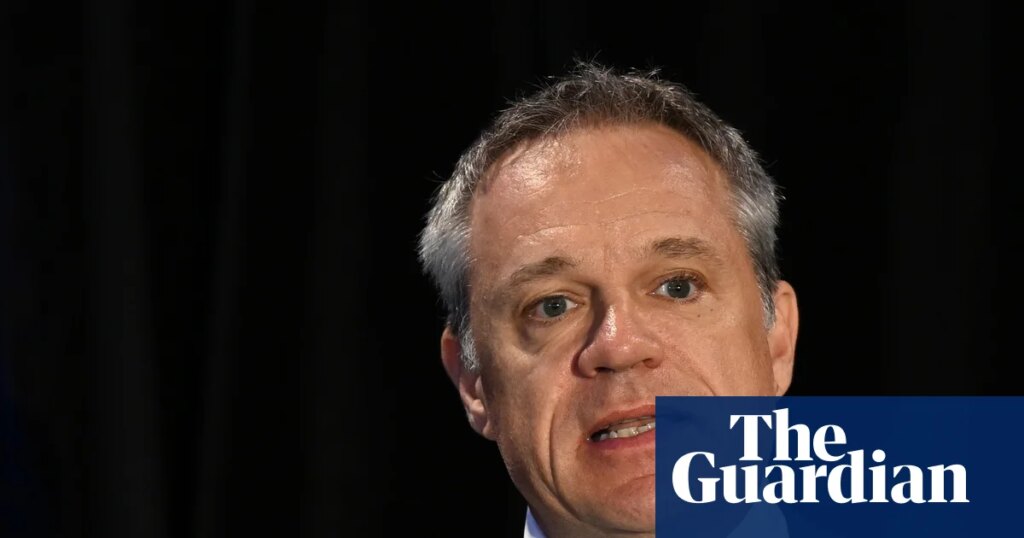
The leader of Nine Entertainment has urged the Prime Minister to prioritize a crucial policy aimed at ensuring that global tech platforms provide financial compensation to local media outlets. This call comes at a time when the revenue streams of publishers worldwide are facing significant disruptions due to the influence of artificial intelligence-driven technology.
During the presentation of the company’s half-year financial results on Tuesday, Nine’s CEO, Matt Stanton, expressed concerns regarding the potential delay of the government’s much-anticipated news bargaining initiative. This initiative, which seeks to establish fair compensation between local media publishers and dominant tech players, has yet to gain traction.
Stanton emphasized the importance of this policy, stating, “This policy is not just of great importance to Nine and the journalism we heavily invest in; it will have long-lasting impacts on the health of our democratic nation, the voices of its communities, and the broader economy.” He further encouraged the Prime Minister to elevate the status of the news media bargaining code on the government’s policy agenda to prevent implementation delays that could stretch into late 2026.
The proposed policy is an extension of the initial voluntary news bargaining code. Its objective is to rectify the power imbalance that existing between major search engines or social media platforms and media publishers, particularly concerning negotiations around compensating publishers for displaying news content.
As many agreements formed under the original voluntary framework have recently lapsed, concerns have been raised regarding its inability to adequately address the power differential at play. This issue has been further magnified in the current AI landscape, characterized by the emergence of “zero-click searches.” This term refers to instances where users can easily access the information they need directly from search engines or AI tools, without ever visiting the news websites that generated the content.
Stanton noted that the growing dominance of global tech giants and the rapid advancements in AI technology pose significant challenges for Australia. He remarked, “Australia faces some significant challenges from the increasing influence of global tech giants and the rapid evolution of artificial intelligence.”
The proposed legislation aims to encompass major players like Meta, Google, and ByteDance, the parent company of TikTok. However, progress has been hindered by broader trade discussions between Australia and the US, which have been made more complex by the tariffs imposed during Donald Trump’s administration.
The aim of this policy is to foster equitable agreements by imposing a government charge on eligible tech companies, which would be offset when these platforms finalize agreements with media publishers.
AI deals
Artificial Intelligence has emerged as a double-edged sword for media companies.
While AI-driven platforms are revolutionizing the way people consume news, Nine has recently managed to secure two licensing deals with significant domestic corporations. These agreements are intended for the usage of its content to train proprietary large language models (LLMs), which are advanced deep learning algorithms.
Stanton commented on the dual nature of AI’s influence, stating, “There will obviously be some efficiencies coming through but a bit of disruption as well,” when questioned about Nine’s prospects in relation to AI.
“We’ve completed a couple of LLM deals that we announced today, and we have a promising pipeline of opportunities, both on a local and global scale,” he added.
However, Nine has reported a notable decline in revenue based on its six-month results, largely due to an ongoing downturn in advertising revenue and challenges within the free-to-air television sector. The broadcaster and publisher experienced a 4% decrease in half-year revenue, totaling $1.06 billion, with the steepest reductions evident within its broadcasting sector, particularly impacting the Nine television network and its digital streaming service 9Now.
Despite these challenges, Nine managed to enhance its overall earnings, which is a measure of profitability, by 6% to $192.2 million for the six-month period. This improvement can be attributed mainly to a robust cost-cutting strategy aimed at achieving savings of roughly $160 million over the span of three years.
The company has undergone significant structural transformations, which include the divestment of other assets, such as its real estate platform Domain and various radio stations. This shift in strategy aims to transition its business model to focus on assets expected to yield better returns in a digital landscape. Notably, this includes the acquisition of the outdoor advertising company QMS Media.
Encouragingly, Nine’s distinguished publications, including the Age, the Sydney Morning Herald, and the Australian Financial Review, have successfully mitigated most of their declines in print and digital advertising via a 12% increase in subscription revenue over the half-year.
Additionally, Nine’s growing streaming service, Stan, has become a revenue driver, thanks to its agreement to broadcast English Premier League matches, serving as a promising growth channel for the company.
Following these results, Nine announced a 4.5-cent interim dividend, with shares seeing an uptick of over 3% shortly after the announcement.
Interested in growing your brand with smarter solutions? Get in touch with Auctera today.

Jessica
https://www.linkedin.com/company/aucteraAffiliate Content Writer