AI Evaluation Raises Concerns About Van Eyck Paintings in Museums in Italy and the US
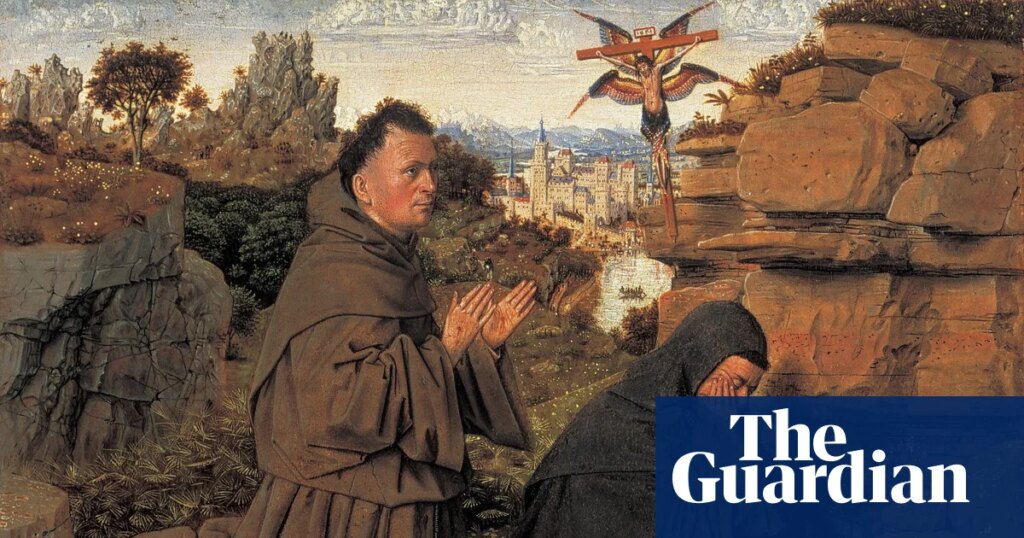
A thought-provoking analysis focusing on two remarkable paintings attributed to the 15th-century Flemish artist Jan van Eyck, housed in museums in the United States and Italy, brings into question the authenticity of these artworks. The inquiry into whether either of the artworks is genuinely Van Eyck’s has sparked significant debate in the art community.
The paintings in question are titled Saint Francis of Assisi Receiving the Stigmata, which are nearly identical, unsigned artworks located in the Philadelphia Museum of Art and the Royal Museums of Turin. They account for a small fraction of the surviving masterpieces attributed to one of Western art’s most revered figures, known for his detailed portraits and compelling religious imagery.
However, a critical issue has arisen: evidence suggests that neither version of the painting may actually bear Van Eyck’s signature technique.
In a groundbreaking analysis, scientific tests employing artificial intelligence have been executed on these paintings by Art Recognition, a Swiss corporation collaborating with Tilburg University in the Netherlands. The results yielded no identifiable brushstrokes characteristic of Van Eyck’s unique style. This analysis deemed the Philadelphia piece to be “91% negative” in terms of authenticity, while the Turin version received a “86% negative” rating.
Till-Holger Borchert, a leading scholar on Van Eyck and director of the Suermondt-Ludwig-Museum in Aachen, commented that these findings bolster the theories of academics who argue that both pieces were likely studio works—produced in Van Eyck’s workshop but not necessarily executed by him personally.
Surprised by the outcome, Borchert emphasized that these results prompt additional inquiries worthy of further exploration.
According to Dr. Carina Popovici, the chief executive of Art Recognition, the magnitude of the negative percentages is especially striking. She mentioned that an analysis of another well-known work by Van Eyck, The Arnolfini Portrait—one of the most celebrated paintings at the National Gallery in London—indicated a much higher likelihood of authenticity at 89%.
Popovici expressed her astonishment at the findings, stating, “I anticipated that if one painting was negative, the other would be positive, but to see both come out negative was unexpected.”
In a conversation with the Guardian, she suggested, “I suspect that both the Philadelphia and Turin museums are not pleased with this news; it certainly doesn’t bode well for these artworks.” As part of the ongoing discussion, some critics have raised concerns that a painting’s condition or any subsequent restorations could impact the accuracy of AI-based brushstroke evaluations.
Art historian Dr. Noah Charney, who discussed the findings from Philadelphia on his podcast, described previous analyses by Art Recognition as “remarkably accurate.” He noted that the unexpected negative results for both artworks led to deeper investigations to validate the claims.
Charney initially believed that the Turin painting would be confirmed as a genuine Van Eyck, while the Philadelphia piece would turn out to be a copy, either from the studio or at a later date.
He explained, “The negative results imply that both paintings are likely studio works, suggesting the possibility of an original that was more authentically created with Van Eyck’s touch.” He added, “It’s a common misconception that if a piece comes from Van Eyck’s workshop, he must have painted every single layer himself. This notion stems from outdated 19th-century perceptions of the solitary artist.”
Van Eyck is often hailed as a pioneer in the realm of oil painting. Dr. Charney emphasized, “[Van Eyck] didn’t invent oil painting; however, his mastery of the medium was so influential that many artists spent centuries working in his shadow.” He added that Van Eyck’s artwork captures light and detail to such an extent that they almost appear ethereal. “His ability to render the ordinary with a luminous quality is why he is regarded not only as a great painter but as an exceptional observer of reality in the canon of western art.” Nevertheless, despite his acclaim, fewer than 20 works are universally recognized as authentically belonging to Van Eyck.
An exhibition highlighting Van Eyck’s portraits is set to open at the National Gallery in London this November.
Moreover, Art Recognition has previously identified up to 40 counterfeit paintings available on eBay in 2024. They also concluded in 2021 that Rubens’ Samson and Delilah housed in the National Gallery was “91% negative,” corroborating skepticism about its attribution to the renowned 17th-century Flemish master.
Interested in growing your brand with smarter solutions? Get in touch with Auctera today.

Jessica
https://www.linkedin.com/company/aucteraAffiliate Content Writer