Georgia spearheads initiative to prohibit data centers driving America’s AI surge.
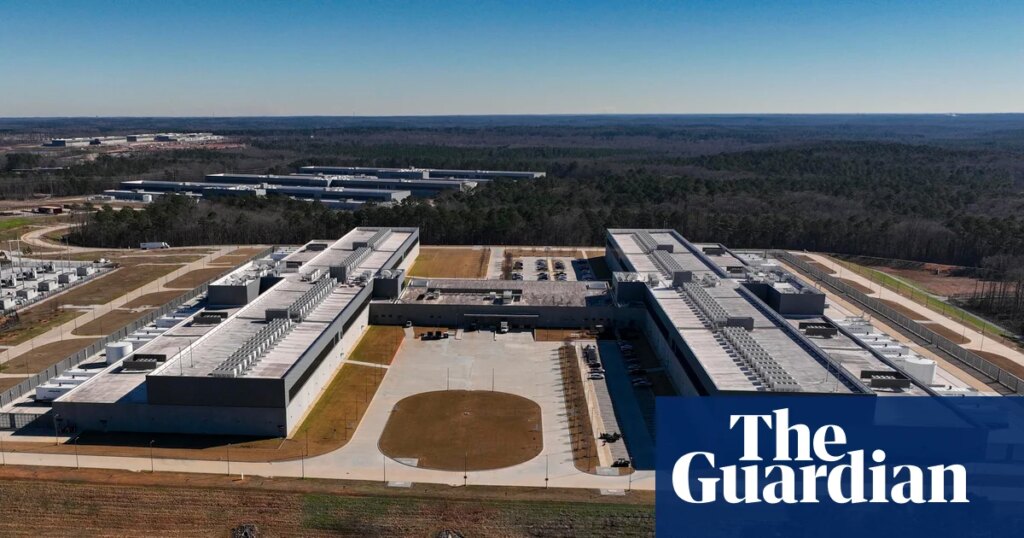
Lawmakers in numerous states across the U.S. are actively considering legislation aimed at imposing statewide bans on the construction of new datacenters. This shift reflects the growing concern surrounding the environmental and economic impacts of these energy-intensive facilities, especially in light of the burgeoning artificial intelligence industry.
In Georgia, a legislator has introduced a bill that could establish the first statewide moratorium on new datacenters in the country. This initiative is part of a wider trend, as at least three statewide moratorium proposals have emerged in various state legislatures in recent weeks, with lawmakers in Maryland and Oklahoma also examining similar measures.
Remarkably, Georgia is quickly becoming the focal point in the battle against unchecked datacenter expansion, known for their substantial consumption of both energy and water. These facilities are integral to supporting the rapidly growing artificial intelligence sector.
The proposed bill in Georgia aims to suspend all new datacenter projects until March of the following year. This pause would allow state and local officials to formulate necessary regulations concerning datacenters, which significantly transform the state’s landscape, according to bill sponsor Ruwa Romman, a Democratic state legislator.
This legislative movement coincides with the Georgia Public Service Commission’s recent action, where it sanctioned a plan to generate an additional 10 gigawatts of electricity over the next few years. This decision marks the largest electricity allocation request in the agency’s history, predominantly driven by datacenter expansion and primarily reliant on fossil fuels.
The 10-gigawatt initiative — sufficient to power approximately 8.3 million homes — arises as the Atlanta metro area has emerged as a leader in datacenter construction in 2024.
Such rapid growth has prompted at least 10 cities within Georgia to implement their own moratoriums on datacenter construction, with the suburb of Roswell recent to join this trend earlier this month. Moreover, municipalities in no fewer than 14 states have enacted similar measures, according to data from Tech Policy Press.
Senator Bernie Sanders, identifying the trends across the nation, suggested a nationwide moratorium last month.
“Communities are becoming increasingly aware of the implications of this aggressive industry… They need time to evaluate all possible harms related to datacenters,” remarked Seth Gladstone, spokesperson for Food and Water Watch.
The explosive growth of datacenters, which are essential for AI, raises significant concerns among residents and advocacy groups. One prominent issue pertains to the escalating costs of electricity. “People inherently link datacenters to their utility bills,” explained Charles Hua, founder of PowerLines. This organization seeks to mitigate utility costs while empowering communities in energy decisions.
Hua elaborated how the interrelation between datacenters and energy costs changes based on state regulatory environments. In Georgia, he emphasized that the Georgia Power utility profits from new investments, incentivizing the continual construction of new power plants. This practice has resulted in a one-third increase in electricity rates over recent years. Meanwhile, he pointed out that the utility has little motivation to enhance the efficiency of the electrical grid, which could lead to lower costs for consumers.
However, concerns regarding datacenters in Georgia extend far beyond electricity costs. There are serious worries about water consumption and the consequent decline in tax revenues. This legislative session has seen Republican lawmakers propose bills to shield consumers from rising utility expenses and to eliminate tax incentives for these facilities. Additionally, a Democrat has suggested requirements for datacenters to publicly disclose their annual energy and water usage.
Ruwa Romman, who is also campaigning for governor, seeks to break the two-decade Republican stronghold in statewide office by potentially becoming the first Palestinian American in such a position in Georgia.
Her legislative proposal, HB 1012, features a Republican co-sponsor, state representative Jordan Ridley. Ridley noted his support was motivated by a desire to provide local governments with the time needed to develop appropriate zoning laws, considering the rapid construction of datacenters across the state.
“Every municipality has zoning regulations, and public input is essential. This process requires time,” Ridley asserted, while also acknowledging the positive tax contributions and job creation that datacenters bring. “I’m not opposed to datacenters as a whole.”
Romman’s bill transcends a mere policy initiative; it also serves as a strategic political maneuver. In her statement, she emphasized the moratorium would allow Georgians to participate actively in elections for the majority of Public Service Commission seats, which bear significant influence over energy-related decisions.
Georgia stands out as one of ten states where utility regulators are elected. In the previous election cycle, progressive Democrats Alicia Johnson and Peter Hubbard won seats on the five-member commission, ending a nearly 20-year monopoly held exclusively by Republicans. A critical seat will be contested in the upcoming election in November.
The implications are substantial: should the commission tilt Democratic, it may no longer unconditionally approve the electricity demands of Georgia Power, which are largely propelled by tech firms aiming to construct datacenters.
In a recent editorial, Hubbard expressed that Georgia voters disapprove of datacenters receiving tax incentives while observing their electricity bills rise. They also witness communities struggling for access to water sources and facing the consequences of high-voltage transmission lines which devalue properties. “Opposition to datacenters is escalating in Georgia because people do not wish to be collateral damage to the unchecked expansion of these facilities, which exacerbate their utility costs,” he stated.
Furthermore, there exists a political aspect to Romman’s legislation. According to Paul Glaze, a spokesperson for Georgia Conservation Voters, if the bill progresses from the House to the Senate, it may foreshadow potential dynamics for the general election later this year.
“The crucial question is: in regions experiencing the encroachment of datacenters, who can voters trust to advocate for their interests?” Glaze remarked. “Candidates aspiring for statewide office must clarify their stance on this issue.”
Interested in growing your brand with smarter solutions? Get in touch with Auctera today.

Jessica
https://www.linkedin.com/company/aucteraAffiliate Content Writer