Georgia spearheads effort to prohibit data centers driving America’s AI surge.
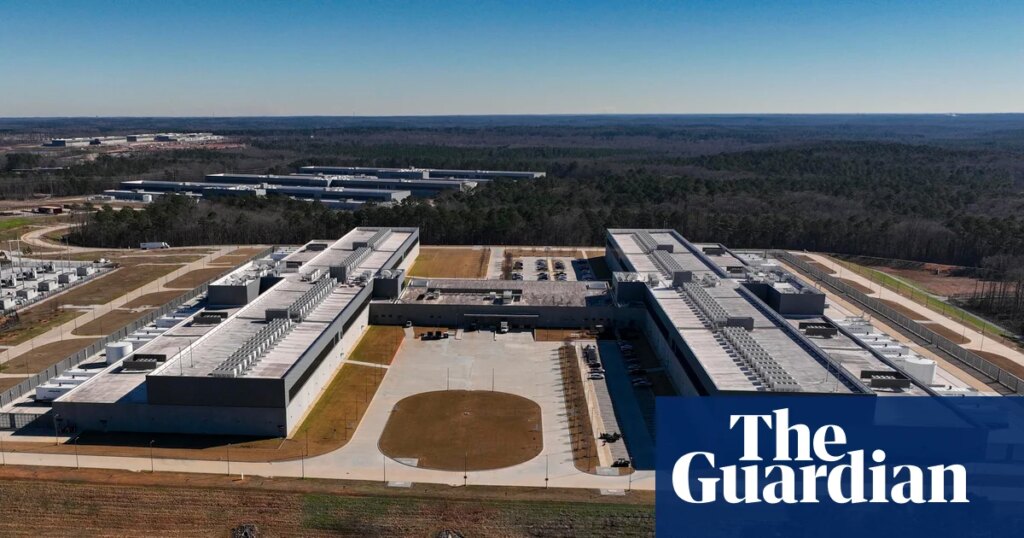
Lawmakers across various states in the U.S. are considering legislation to impose statewide bans on the construction of new datacenters. This initiative arises in response to growing concerns about the energy consumption and environmental impact of these facilities. They have become a focal point of economic and ecological discussions nationwide.
In Georgia, a proposed bill introduced by a state lawmaker has the potential to establish the nation’s first statewide moratorium on new datacenters. This bill is one of at least three similar measures introduced by state legislatures in recent weeks, with Maryland and Oklahoma also exploring comparable restrictions.
However, Georgia is emerging as the epicenter in the debate against the unchecked expansion of datacenters. These facilities are infamous for their heavy energy and water usage as they support the rapidly growing artificial intelligence industry.
The Georgia bill aims to suspend all new datacenter projects until March of next year, giving state, county, and municipal officials the time needed to formulate regulatory policies. Bill sponsor and Democratic legislator Ruwa Romman stated that the moratorium is necessary to prevent changes that “permanently alter the landscape of our state.”
This proposal coincides with a recent decision by Georgia’s public service commission to approve a plan to add 10 gigawatts of energy over the next several years—the largest request for energy in the commission’s history. This electricity demand is largely driven by datacenters and will primarily be supplied by fossil fuels.
The 10-gigawatt plan has the capacity to electrify approximately 8.3 million homes, which comes at a time when the Atlanta metro area has led the nation in new datacenter construction for 2024.
The surge in datacenter development has prompted at least 10 municipalities in Georgia to enact their own moratoriums on datacenter construction, with Roswell being the latest to join this trend earlier this month. Across the country, municipalities in at least 14 states have taken similar measures, as documented by Tech Policy Press.
Furthermore, Senator Bernie Sanders proposed a national moratorium last month.
Seth Gladstone, spokesperson for Food and Water Watch, emphasized that as communities gain a better understanding of the implications of this industry, they are more inclined to call for time to investigate potential harms thoroughly.
The unchecked surge in datacenter construction, primarily aimed at supporting AI, raises numerous concerns among residents and activists. One of the primary issues is the impact on electricity costs. “In the public’s perception, datacenters and utility bills are intertwined,” stated Charles Hua, the founder and executive director of PowerLines, an organization dedicated to reducing energy bills and engaging communities in energy decision-making.
Hua explained that the connection between datacenters and utility costs varies significantly based on each state’s regulatory framework. In Georgia, for instance, the utility company, Georgia Power, profits from new capital investments, creating a financial incentive for constructing new power plants. This approach has resulted in a one-third increase in Georgia’s rates in just a few years. Conversely, the company lacks the motivation to make the electrical grid more efficient, which could potentially reduce electricity prices, according to Hua.
The concerns surrounding datacenters in Georgia also touch upon water usage and lost tax revenue. This year, some Republicans in the state legislature have proposed bills aimed at shielding consumers from rising utility rates and eliminating tax incentives for datacenters. Additionally, a Democrat has put forth a bill requiring datacenters to publicly disclose their annual energy and water consumption.
Notably, Romman is also a gubernatorial candidate, and if elected, she would make history as the first Palestinian American in statewide office in Georgia, breaking the long-standing Republican grip on the governorship that has lasted nearly 25 years.
Her bill, HB 1012, counts a Republican co-sponsor, state representative Jordan Ridley, as a supporter. Ridley remarked that his endorsement of the bill stems from the need to give local governments time to develop zoning laws concerning datacenters, which are rapidly increasing in number across the state.
“Each local government needs zoning codes and public input, which takes time,” Ridley stated. However, he acknowledged that “datacenters also provide tax revenue and high-paying jobs. I’m not against datacenters.”
Romman’s proposal functions as more than just a policy maneuver; it also serves political purposes. She articulated that the moratorium “would afford Georgians the opportunity to vote for the majority of the Public Service Commission members responsible for making final judgments on energy-related projects.”
Georgia is one of just ten states that allow voter elections for their utility regulators. In a significant election last November, Georgia voters elected progressive Democrats Alicia Johnson and Peter Hubbard to serve on the five-member commission, breaking its long-standing Republican majority for the first time in nearly two decades. There’s another seat up for election this November.
The underlying motivation is clear: if the commission shifts to a Democratic majority, it would likely halt the rubber-stamping of energy demands from Georgia Power, especially fueled by tech firms striving to develop new datacenters.
Hubbard, now in his new role, recently published an editorial stating that Georgia residents are increasingly aware of the “tax breaks” provided to datacenters while their utility bills continue to rise. He highlighted that communities are grappling with competition for water resources and concerns about high voltage transmission lines devaluing property. He noted that the Public Service Commission has granted every single request from the monopoly utility without opposition.
“This is the reason why opposition to datacenters is escalating in Georgia; because residents are fed up with being treated as collateral damage due to the unregulated expansion of this industry that drives up their power bills,” he argued.
Romman’s bill carries political significance beyond its immediate legislative implications. Paul Glaze, a spokesperson for Georgia Conservation Voters, remarked that if the bill moves from the House to the Senate, “it may serve as an early indication of the dynamics in the impending general election” later this year.
“The real question is whether voters in areas impacted by datacenters will trust their representatives to advocate on their behalf,” Glaze noted. “Candidates vying for state office should clearly define their stance on this issue.”
Interested in growing your brand with smarter solutions? Get in touch with Auctera today.

Jessica
https://www.linkedin.com/company/aucteraAffiliate Content Writer