JP Morgan CEO suggests slowing AI deployment to ‘protect society’
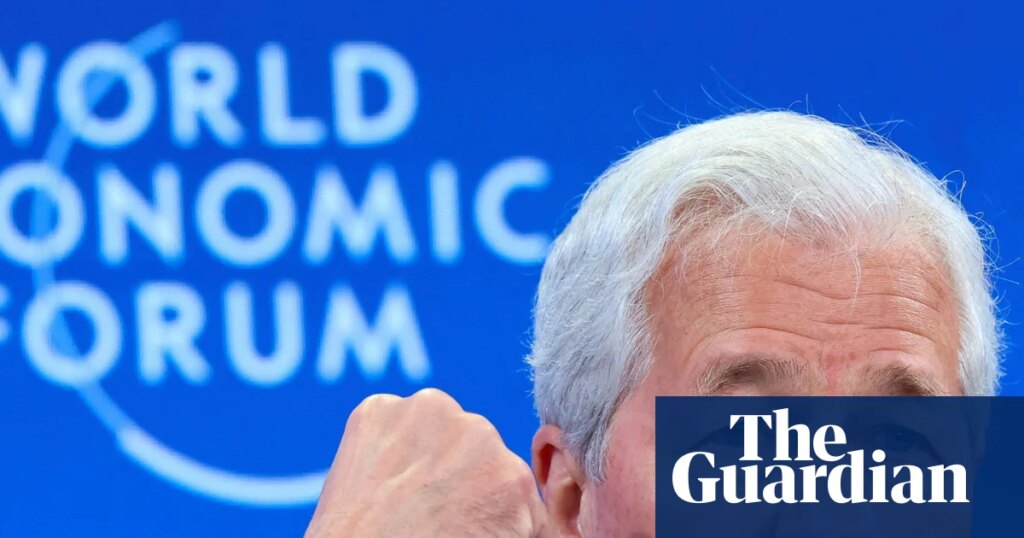
Jamie Dimon, the CEO of JP Morgan, has voiced significant concerns about the rapid advancement of artificial intelligence (AI), warning that it could “go too fast for society” and lead to “civil unrest” if adequate measures aren’t implemented to support workers who might be displaced. Dimon argues that while the potential benefits of AI are enormous—from boosting productivity to curing diseases—there is a pressing need to manage its integration into the workforce carefully to “save society.”
During his remarks at the World Economic Forum held in Davos, Switzerland, he indicated that businesses, particularly in financial services, might employ fewer people in the coming years as AI technology becomes more widespread. He emphasized that both corporations and governments cannot afford to ignore the rapid evolution of AI or “stick their heads in the sand.” He stated, “Your competitors are going to use it and countries are going to use it.”
Acknowledging the transformative power of AI, Dimon stressed that its growth might outpace societal readiness. “However, it may go too fast for society and if it goes too fast for society, that’s where governments and businesses [need to] in a collaborative way step in together and come up with a way to retrain people and move it over time,” he explained. This cooperation is essential to ensure a more gradual transition, rather than a sudden shock to the economy and workforce.
He specifically pointed out that local governments may need to implement assistance programs to facilitate worker transitions, including support for wages, retraining, relocation, and even early retirement for those unable to adapt. Highlighting the issue more explicitly, he referred to the potential impact of driverless technology on the 2 million commercial truck drivers in the United States, arguing that they could be significantly affected if autonomous trucks become more common on the highways.
“Should you do it all at once? If 2 million people go from driving a truck and making $150,000 a year to a next job that might be $25,000? No. You will have civil unrest. So phase it in,” he cautioned. He believes that this phased implementation of AI must occur to avoid widespread discontent and upheaval. Further elaborating on this necessity, Dimon noted that by finding a balance that supports societal welfare, advancements in technology could lead to improved productivity and significant health breakthroughs, including curing various cancers.
Dimon also discussed political matters, addressing his concerns about President Donald Trump’s aggressive stance toward Europe, NATO, and other international affairs before Trump’s address at the same event. While offering a restrained critique, he stated that fostering a stronger Europe is fundamentally a viable goal. “If the goal is to make them stronger rather than fragment Europe, I think that’s OK,” he remarked. He suggested employing various forms of persuasion—moral, economic, intelligence, and military aspects—to more effectively encourage European nations to take the necessary actions for their own benefit.
On the topic of immigration, Dimon expressed his discontent with the current administration’s clampdown, urging for a calming of the “internal anger” surrounding the issue. He noted, “I don’t like what I’m seeing with five grown men beating up little women,” pointing to violent encounters involving Immigration and Customs Enforcement (ICE) officers. Though he acknowledged the need to manage criminal activity, he requested increased transparency about those being targeted for deportation, advocating for a comprehensive understanding of their legal status and backgrounds.
In his view, many immigrants contribute significantly to the US economy, finding roles in healthcare, hospitality, and agriculture. “We all know them. They are good people and they should be treated that way,” he emphasized, creating a case for more humane immigration policies.
In addition to Dimon’s viewpoints, Jensen Huang, the CEO of Nvidia, which supplies chips crucial for AI operations, shared his own perspective at the same forum. Huang highlighted labor shortages rather than mass layoffs as the predominant challenge associated with AI, downplaying fears of substantial job losses. “Energy’s creating jobs, the chips industry is creating jobs, the infrastructure layer is creating jobs … jobs, jobs, jobs,” he stated, suggesting that current trends indicate a burgeoning job market across multiple sectors, driven by the expansion of infrastructure.
He elaborated on this concept by describing the ongoing infrastructure expansion as “the largest infrastructure buildout in human history,” which he argues is poised to create numerous employment opportunities. Many of these jobs will be tied to essential trades, including plumbing, electrical work, construction, and technology roles related to AI installations. Huang noted that salaries in these fields are already increasing markedly in the United States, especially among those involved in establishing chip manufacturing plants and AI data centers.
Moreover, Huang positioned the rise of AI robotics as a “once-in-a-generation” chance for Europe to strengthen its industrial manufacturing base. He stated, “This is your opportunity to now leap past the era of software,” emphasizing that Europe now has the potential to gain ground against Silicon Valley, which has historically held a competitive edge in this domain.

Jessica
https://www.linkedin.com/company/aucteraAffiliate Content Writer